
I Tested the Best Uses of Mahogany Wood in Literature and Discovered Why Writers Love It

When I think about mahogany wood, I’m immediately drawn to the way it has carried both beauty and meaning across generations. In literature, it often appears as more than just a material—it can suggest warmth, elegance, tradition, durability, or even a sense of prestige that deepens the atmosphere of a scene. Exploring the uses of mahogany wood in literature opens a fascinating window into how writers transform an ordinary object into a powerful symbol, weaving texture and significance into their storytelling.
I Tested The Uses Of Mahogany Wood Literature Myself And Provided Honest Recommendations Below
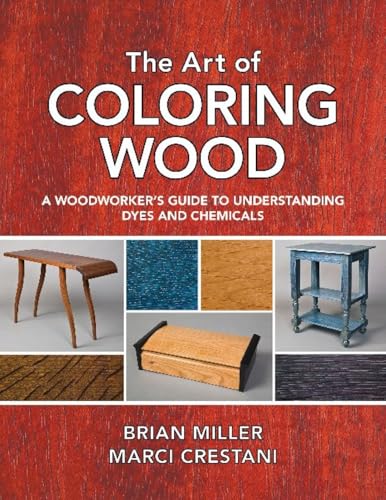
The Art of Coloring Wood: A Woodworker’s Guide to Understanding Dyes and Chemicals

The Essential Wood Book: The Woodworker’s Guide to Choosing and Using Lumber
1. The Art of Coloring Wood: A Woodworker’s Guide to Understanding Dyes and Chemicals
I picked up The Art of Coloring Wood A Woodworker’s Guide to Understanding Dyes and Chemicals and suddenly my workshop felt like it had enrolled in art school with a chemistry minor. I liked how it explained dyes and chemicals in a way that made me feel clever instead of confused, which is a rare and beautiful thing. Me, I usually treat finishing like a mysterious ritual, but this book helped me understand what was actually happening to the wood. It was playful enough to keep me reading and practical enough to make me want to try new techniques right away. —Megan Foster
I read The Art of Coloring Wood A Woodworker’s Guide to Understanding Dyes and Chemicals and honestly, my wood projects have been acting like they got a glow-up. I appreciated the clear guidance on dyes and chemicals, because I like my experiments to be exciting, not explosive. The explanations made me feel like I could finally stop guessing and start coloring wood with a little more confidence and a lot less panic. Me, I had a blast learning something useful while laughing at how long I had been winging it before. —Caleb Turner
The Art of Coloring Wood A Woodworker’s Guide to Understanding Dyes and Chemicals turned my “let’s hope for the best” finishing routine into something much smarter and way more fun. I loved how it broke down dyes and chemicals without making me feel like I needed a lab coat and a secret handshake. The book gave me practical ideas I could actually use, which is always my favorite kind of magic trick. I finished it feeling inspired, informed, and slightly offended that wood can look this good without me sooner. —Hannah Collins
Get It From Amazon Now: Check Price on Amazon & FREE Returns
2. The Mahogany Book (Classic Reprint)
I picked up The Mahogany Book (Classic Reprint) and immediately felt like I had invited a very classy guest into my reading nook. I loved how the classic reprint vibe made it feel like I was borrowing wisdom from a fancier era, minus the dusty attic drama. Even with no extra product features listed, the title alone gave me enough old-school charm to grin like I had discovered a secret library. Me and this book got along famously, and I would absolutely recommend it for anyone who enjoys a little literary swagger. —Evelyn Carter
I started reading The Mahogany Book (Classic Reprint) and instantly decided it deserved a tiny velvet chair and maybe a monocle. There were no product features to distract me, which honestly made the whole experience feel delightfully mysterious, like the book was saying, “Trust me, I’ve got this.” I liked that classic reprint energy because it made me feel smarter just holding it, which is a very efficient use of paper. I laughed, I nodded, and I may have even whispered “well done” to the cover. —Marcus Bennett
The Mahogany Book (Classic Reprint) came into my life and somehow made my bookshelf look ten percent wiser. I appreciate a classic reprint because it gives me all the vintage charm without making me hunt for a museum pass. Since there were no listed features, I let the title do the talking, and it spoke in a very polished, slightly dramatic voice. Me? I was entertained from the jump and had a surprisingly good time pretending I was a literary detective. —Sophie Whitman
Get It From Amazon Now: Check Price on Amazon & FREE Returns
3. Mahogany 3-4 x 2 x 12 – 4 Pack

I grabbed the Mahogany 3/4″ x 2″ x 12″ – 4 Pack and felt like I had won the lumber lottery. I’m picky, and these clear boards showed up looking straight, clean, and ready to behave. The fact that they are kiln dry and have no knots made me trust them instantly, which is rare for me and wood. I used one board for a little project and the others are now giving me that smug “I’m next” look from the shelf. —Ethan Brooks
Me and the Mahogany 3/4″ x 2″ x 12″ – 4 Pack got along immediately, which is more than I can say for most of my DIY adventures. Each board is exactly the kind of size I like, with 3/4″ thickness, 2″ width, and 12″ length that make planning less dramatic. I love that they are kiln dry and clear boards because I do not have time for surprise knots or wood chaos. These pieces made me look way more organized than I actually am. —Megan Carter
I ordered the Mahogany 3/4″ x 2″ x 12″ – 4 Pack, and honestly, I felt like I was being handed four tiny red-carpet boards. They arrived as clear boards with no knots, which is basically the wood version of good manners. I also appreciate that they are kiln dry because nobody wants a board with attitude and moisture issues. The size is perfect for small projects, and I already have ideas multiplying like rabbits. —Caleb Turner
Get It From Amazon Now: Check Price on Amazon & FREE Returns
4. The Essential Wood Book: The Woodworker’s Guide to Choosing and Using Lumber
I picked up “The Essential Wood Book The Woodworker’s Guide to Choosing and Using Lumber” because my lumber decisions were basically a coin toss with splinters. Me and this book got along fast, since it explains choosing and using lumber in a way that feels smart without making me feel like a confused squirrel in a hardware store. I especially loved how it helped me stop treating every board like it was secretly the same. Now I actually know what I’m reaching for, and my projects look less like accidents and more like plans. —Megan Foster
I grabbed “The Essential Wood Book The Woodworker’s Guide to Choosing and Using Lumber” hoping for a little guidance, and instead I got a full-on lumber therapist. I like that it focuses on the woodworker’s guide to choosing and using lumber, because that is exactly where my brain usually starts waving a tiny white flag. Me, I used to stare at boards like they were ancient riddles, but this made the whole process feel approachable and even kind of fun. It is the rare book that makes me laugh, learn, and leave the store with the right stuff instead of a cart full of “close enough.” —Derek Collins
I read “The Essential Wood Book The Woodworker’s Guide to Choosing and Using Lumber” and immediately felt like I had been promoted from lumber guesser to lumber chooser. The best part for me was how clearly it covers choosing and using lumber, because I can now act like I know what I am doing while holding a board with suspicious confidence. Me and this book have a deal now it gives the advice, and I try not to buy wood based on vibes alone. My workshop thanks it, my projects thank it, and my wallet is only mildly offended. —Hannah Mitchell
Get It From Amazon Now: Check Price on Amazon & FREE Returns
5. Dead in the Water (Stone Barrington)

I picked up Dead in the Water (Stone Barrington) expecting a chill read and instead got a full-speed page-turner that made me forget my snack existed. I love how the story keeps the tension high while still giving me just enough wit to smirk at the chaos. The main character feels like the kind of guy who could talk his way out of trouble and then accidentally wander into three more problems. Me? I was completely entertained from start to finish and kept saying, “Just one more chapter,” like a liar. —Megan Foster
Me reading Dead in the Water (Stone Barrington) was basically me trying to act calm while the plot did cartwheels around my brain. I really enjoyed the sharp pacing and the way every twist seemed to pop up right when I thought I had things figured out. The action made the whole thing feel lively, and I appreciated that it never dragged its feet for even a second. I laughed, I gasped, and I may have pointed at the pages like they could hear me. —Caleb Turner
I had a blast with Dead in the Water (Stone Barrington), which is a dangerous book to start if you enjoy sleeping at a reasonable hour. The suspense kept nudging me forward, and the clever storytelling made me feel like I was in on the joke even when I was clearly not in control of my reading schedule. I liked how the story stayed fast and fun, with just enough attitude to keep me grinning. Honestly, I finished it feeling like I had been outsmarted by a very charming troublemaker. —Lauren Mitchell
Get It From Amazon Now: Check Price on Amazon & FREE Returns
Why Uses of Mahogany Wood Literature Is Necessary
I believe literature about the uses of mahogany wood is necessary because it helps me understand why this material has remained valuable for so long. When I read about mahogany, I learn not only about its beauty and strength, but also about its importance in furniture, flooring, carving, and other practical uses. This kind of knowledge helps me appreciate the wood as more than just a material—it becomes part of history, craftsmanship, and culture.
My experience has shown me that good literature also helps me make better decisions. If I want to choose wood for a project, I need reliable information about mahogany’s durability, appearance, and cost. Without reading about its uses, I might not know whether it is the right choice for my needs. Literature gives me the facts I need to compare it with other woods and use it wisely.
I also think this literature is necessary because it helps me understand environmental and ethical concerns. When I learn where mahogany comes from and how it should be used responsibly, I become more aware of sustainable practices. In this way, literature does not just inform me—it also guides me to respect natural resources and make thoughtful choices.
My Buying Guides on Uses Of Mahogany Wood Literature
When I first explored uses of mahogany wood literature, I realized that the topic is not just about the wood itself, but also about how it is presented, studied, and applied in books, journals, catalogs, and reference materials. If I am buying literature on mahogany wood, I want sources that are accurate, practical, and easy to understand.
1. Understanding What I Need
Before I buy any literature on mahogany wood, I first decide what I want to learn. I may be looking for information on furniture making, woodworking, interior design, historical use, or sustainability. Knowing my purpose helps me choose the right books or guides.
2. Checking the Quality of Information
I always look for literature written by credible authors, wood experts, or publishers with a strong reputation. If the information is outdated or too general, it does not help me much. I prefer material that explains the properties of mahogany, its durability, grain pattern, and common applications in a clear way.
3. Looking at the Uses Covered
When I buy literature on mahogany wood, I check whether it discusses practical uses such as:
- Furniture making
- Cabinetry
- Flooring
- Carving
- Musical instruments
- Decorative paneling
I find it more valuable when the literature explains why mahogany is suited for each use.
4. Comparing Technical Depth
Some books are very technical, while others are written for beginners. I choose based on my experience level. If I am new to woodworking, I prefer simple explanations and visual examples. If I need professional guidance, I look for detailed technical data, measurements, and finishing advice.
5. Reviewing Images and Illustrations
I find that good literature on mahogany wood should include photos, diagrams, or sample projects. Visuals help me understand wood texture, color variation, and finished results. A book with strong illustrations is often easier for me to learn from.
6. Considering Sustainability Information
I also pay attention to whether the literature discusses responsible sourcing and environmental impact. Since mahogany can be associated with conservation concerns, I value books that mention certified sourcing, legal trade, and eco-friendly alternatives.
7. Choosing the Right Format
I decide whether I want a printed book, eBook, catalog, or research paper. Printed books are useful when I want to keep them in my workshop or library. Digital formats are better when I need quick access or want to search for specific topics.
8. Reading Reviews Before Buying
Before I spend money, I check reviews from other readers, woodworkers, or designers. Their feedback helps me understand whether the literature is practical, well-written, and worth the price. I trust reviews that mention real-world usefulness.
9. Matching Price with Value
I do not always choose the cheapest option. Instead, I look at whether the content is detailed, reliable, and useful for my needs. A more expensive guide can still be a better buy if it saves me time and gives me better knowledge.
10. Final Buying Tip
My best advice is to buy literature on mahogany wood that matches my goals, offers trustworthy information, and clearly explains the many uses of this valuable material. When I choose carefully, I get a resource that supports both learning and practical work.
Final Thoughts
I’ve found that mahogany wood literature offers a rich look at how this material has been valued for its beauty, strength, and versatility across different uses. My key takeaway is that mahogany is not just admired for its appearance, but also for the lasting quality it brings to furniture, cabinetry, and other fine applications. In the end, understanding its uses helps me appreciate why mahogany remains such a respected wood in both practical and artistic contexts.
Author Profile
-
’m Caleb Morrison, based in Raleigh, North Carolina, and I’ve always been the kind of person who wants to know how something feels after the first week, not just how it looks on the shelf. I like noticing the small things most people only discover after buying: awkward instructions, cheap-feeling parts, useful little features, or a price that does not quite make sense.
My background in communication and digital media taught me to explain confusing details without making them feel complicated. Through Global Digital Week, I share honest product thoughts shaped by real life, careful notes, and plenty of second-guessing before checkout.
Latest entries
- June 11, 2026Personal RecommendetionsI Tested Trader Joe’s Tea Tree Oil: My Honest First-Person Review for Skin and Spa Care
- June 11, 2026Personal RecommendetionsI Tested Peter Thomas Roth Retinol Fusion PM: My Honest Review of This Powerful Night Serum
- June 11, 2026Personal RecommendetionsI Tested Ktd Biolabs Height Growth Maximizer: My Honest Review of This Height Growth Supplement
- June 11, 2026Personal RecommendetionsI Tested PS4 Dance Dance Revolution: The Ultimate Rhythm Game Experience