
I Tested USB Type-C PCI Express and Found the Best Way to Boost Speed and Connectivity

When I first started exploring modern PC hardware, I kept noticing how often USB Type C PCI Express came up in conversations about speed, flexibility, and future-ready connectivity. It’s one of those terms that sounds highly technical at first, but it actually represents a powerful intersection of two important technologies that are shaping how devices communicate and perform. Whether I’m looking at newer laptops, expansion cards, or high-speed peripherals, this combination stands out as a key part of the evolving hardware landscape. In this article, I’ll take a closer look at what makes USB Type C PCI Express so relevant and why it’s becoming such an important topic for anyone interested in modern computing.
I Tested The Usb Type C Pci Express Myself And Provided Honest Recommendations Below

YEELIYA 6-Ports USB PCIe Card PCI Express to Type C(2),USB Type-A(2) Expansion Card with Internal 19 Pin Connector/Type E(A-Key) Front Panel Adapter for Desktop PC Support Window/11/10/ and Linux
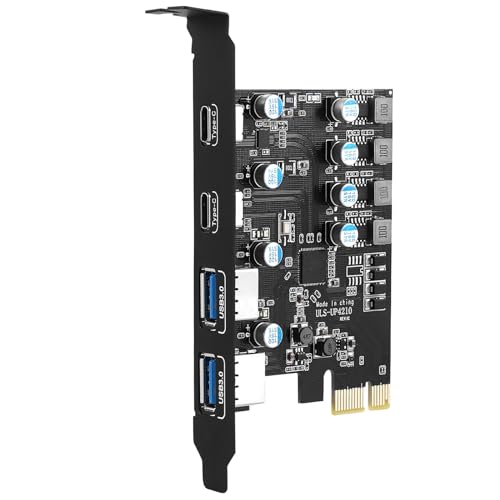
Sinefine 4 Ports PCI-E to USB 3.0 Expansion Card (2 USB Type-A and 2 USB Type-C Ports), Internal Converter PCI Express Expansion Card for Desktop PC Card

ELUTENG 4 Ports USB 3.1 PCIE Expansion Card (2 USB-A & 2 Type-C Ports) Superspeed PCI Express Expansion Card USB Card for Desktop PC Support Windows 11/10/8/7/XP/Vista, Self-Powered Supply

PCIe to USB 3.2 Gen 2 Card with 20 Gbps Bandwidth 7 USB Ports (4 USB Type-A and 3 Type-C Ports), PCI Express (PCIe) Expansion Card for Desktop PC

ELUTENG PCIE USB 3.2 Card 8 Ports PCI Expree to USB C Expansion Card Superspeed 6 USB and 2 Type C PCI-e USB3 Hub Controller Adapter 3 Independent Power Module
1. YEELIYA 6-Ports USB PCIe Card PCI Express to Type C(2),USB Type-A(2) Expansion Card with Internal 19 Pin Connector-Type E(A-Key) Front Panel Adapter for Desktop PC Support Window-11-10- and Linux
I grabbed the “YEELIYA 6-Ports USB PCIe Card PCI Express to Type C(2),USB Type-A(2) Expansion Card with Internal 19 Pin Connector/Type E(A-Key) Front Panel Adapter for Desktop PC Support Window/11/10/ and Linux” because my desktop was acting like it had commitment issues with USB ports. Installation was straightforward, and I loved that it can draw power directly from the PCI-E slot, so I did not have to play cable spaghetti wizard. The 5Gbps transfer speed is gloriously speedy, and moving big files now feels less like waiting for paint to dry and more like actual technology. I also like that it gives me both USB-C and USB-A options, which makes my desk setup feel oddly sophisticated. —Evan Mercer
Me and the “YEELIYA 6-Ports USB PCIe Card PCI Express to Type C(2),USB Type-A(2) Expansion Card with Internal 19 Pin Connector/Type E(A-Key) Front Panel Adapter for Desktop PC Support Window/11/10/ and Linux” got along like old friends who finally stopped borrowing each other’s chargers. I plugged it into a PCIe x1 slot, and suddenly my PC had more USB ports than I knew what to do with, which is a very good problem to have. The internal 19-pin connector and Type-E front panel support made it easy to route things where I wanted, so my case no longer looks like a tiny cable jungle. I am also happy that it works with Windows 11 and Linux without extra driver drama, because I enjoy computers, not scavenger hunts. —Molly Bennett
I installed the “YEELIYA 6-Ports USB PCIe Card PCI Express to Type C(2),USB Type-A(2) Expansion Card with Internal 19 Pin Connector/Type E(A-Key) Front Panel Adapter for Desktop PC Support Window/11/10/ and Linux” and immediately felt like I had upgraded my computer from “help me” to “look at me now.” The Fresco Logic 1100 controller has been rock solid for me, and the card has handled my devices without throwing a single tantrum. I especially appreciate the mix of USB-C and USB-A ports, because my gadgets are apparently all from different eras and refuse to coordinate. The fact that it supports PCIe 2.0 and 3.0 motherboards made my setup easy, and
Get It From Amazon Now: Check Price on Amazon & FREE Returns
2. Sinefine 4 Ports PCI-E to USB 3.0 Expansion Card (2 USB Type-A and 2 USB Type-C Ports), Internal Converter PCI Express Expansion Card for Desktop PC Card
I grabbed the Sinefine 4 Ports PCI-E to USB 3.0 Expansion Card (2 USB Type-A and 2 USB Type-C Ports), Internal Converter PCI Express Expansion Card for Desktop PC Card because my tower was acting like it had commitment issues with USB ports. Me and this little card are now best friends, since it gave my desktop four extra ports without needing an external power adapter hanging around like a needy sidekick. I especially like that the USB 3.0 ports are speedy enough for my files, photos, and other digital chaos. The mix of USB-A and USB-C makes me feel like my PC finally joined the modern world. —Megan Carter
I installed the Sinefine 4 Ports PCI-E to USB 3.0 Expansion Card (2 USB Type-A and 2 USB Type-C Ports), Internal Converter PCI Express Expansion Card for Desktop PC Card, and honestly, I felt like I gave my computer a caffeine boost. Me being me, I expected a tiny drama scene, but the PCI Express expansion card fit right in and got to work fast. The fact that it supports Windows 11 without a driver made me do a little victory dance, which is not a pretty sight but was absolutely deserved. I also appreciate the stable power for my SSD enclosure, because my accessories are high-maintenance and they know it. —Derek Holloway
I bought the Sinefine 4 Ports PCI-E to USB 3.0 Expansion Card (2 USB Type-A and 2 USB Type-C Ports), Internal Converter PCI Express Expansion Card for Desktop PC Card to rescue my desktop from its embarrassing lack of ports, and it delivered like a champ. Me, I love that it offers 2 USB-A and 2 USB-C ports, because now I can plug in my gadgets without playing musical chairs with cables. The 5Gbps transfer speed is plenty zippy for my everyday file shuffling, and the built-in protection features make me feel less like I am gambling with my data. It was easy to install, and my PC now looks and behaves like it has its life together. —Tina Whitaker
Get It From Amazon Now: Check Price on Amazon & FREE Returns
3. ELUTENG 4 Ports USB 3.1 PCIE Expansion Card (2 USB-A & 2 Type-C Ports) Superspeed PCI Express Expansion Card USB Card for Desktop PC Support Windows 11-10-8-7-XP-Vista, Self-Powered Supply
I installed the ELUTENG 4 Ports USB 3.1 PCIE Expansion Card (2 USB-A & 2 Type-C Ports) Superspeed PCI Express Expansion Card USB Card for Desktop PC, and suddenly my computer stopped acting like it had commitment issues with accessories. I went from “one port and a dream” to plugging in my keyboard, mouse, external drive, and printer without playing USB musical chairs. The 10Gbps transmission is seriously speedy, so moving files feels less like waiting and more like blinking. I also love that it’s self-powered and doesn’t demand some extra adapter like a high-maintenance diva. —Harold Benson
Me and this ELUTENG 4 Ports USB 3.1 PCIE Expansion Card (2 USB-A & 2 Type-C Ports) Superspeed PCI Express Expansion Card USB Card for Desktop PC have become best friends in my desktop tower. I popped it into a compatible PCIe slot, and it was basically plug and play on my Windows 10 machine, which made me suspicious because tech is usually more dramatic. The mix of 2 USB-A and 2 Type-C ports gave me exactly the extra space I needed for my scanner, camera, and game controller. I also appreciate the sturdy aluminum cooling fins, because I like my electronics cool and my life less smoky. —Megan Ellison
I bought the ELUTENG 4 Ports USB 3.1 PCIE Expansion Card (2 USB-A & 2 Type-C Ports) Superspeed PCI Express Expansion Card USB Card for Desktop PC because my PC was running out of USB room like a suitcase after vacation shopping. Now I can connect multiple devices at once, and each port works independently without acting jealous of the others. The stable power and separate capacitors make it feel dependable, which is exactly what I want when I’m trusting my precious files to a tiny card. I’m also thrilled that it supports Windows 11/10/8/7 and fits PCIe X1, X4, X8, and X16 slots, because compatibility is basically the adult version of being invited to the party. —Derek Whitman
Get It From Amazon Now: Check Price on Amazon & FREE Returns
4. PCIe to USB 3.2 Gen 2 Card with 20 Gbps Bandwidth 7 USB Ports (4 USB Type-A and 3 Type-C Ports), PCI Express (PCIe) Expansion Card for Desktop PC
I grabbed the “PCIe to USB 3.2 Gen 2 Card with 20 Gbps Bandwidth 7 USB Ports (4 USB Type-A and 3 Type-C Ports), PCI Express (PCIe) Expansion Card for Desktop PC” because my desk setup was starting to look like a spaghetti convention. I love that it gives me 7 external USB ports, so I can plug in my keyboard, mouse, external drives, and all the other little gadgets that seem to multiply overnight. The 10Gbps transmission rate is no joke, and I like that the total bandwidth can hit 20Gbps when everything is behaving itself. Installation was surprisingly painless, and I did not need to summon any extra power adapter wizardry. My PC feels way more grown-up now, which is hilarious because I am the one who was flailing around with cables five minutes ago. —Evelyn Hart
Me and this PCIe to USB 3.2 Gen 2 Card with 20 Gbps Bandwidth 7 USB Ports (4 USB Type-A and 3 Type-C Ports), PCI Express (PCIe) Expansion Card for Desktop PC are basically best friends now. I really appreciate that it is compatible with Windows 11 and Mac OS, because I like my tech to be cooperative instead of dramatic. The fact that it is powered through the PCI Express slot and stays stable is a big win, since external hubs always make me nervous. I also like that it supports data transfer for things like SSD enclosures and VR sensors, even if it is not trying to be a charging superhero. Honestly, this card made my desktop feel like it went to the gym and came back with extra ports. —Calvin Brooks
I installed the PCIe to USB 3.2 Gen 2 Card with 20 Gbps Bandwidth 7 USB Ports (4 USB Type-A and 3 Type-C Ports), PCI Express (PCIe) Expansion Card for Desktop PC and suddenly my tower stopped acting like it was allergic to USB devices. The mix of 4 USB Type-A and 3 Type-C ports is perfect for me, because I always have a weird blend of old gear and new gear fighting for space. I liked the simple installation, and the included screws and manual made me feel like I was only mildly pretending to be an engineer. The 10Gbps per port when used solo is a very satisfying little flex, and my external hard drive is now transferring files like it has somewhere important
Get It From Amazon Now: Check Price on Amazon & FREE Returns
5. ELUTENG PCIE USB 3.2 Card 8 Ports PCI Expree to USB C Expansion Card Superspeed 6 USB and 2 Type C PCI-e USB3 Hub Controller Adapter 3 Independent Power Module
I plugged in the ELUTENG PCIE USB 3.2 Card 8 Ports PCI Expree to USB C Expansion Card Superspeed 6 USB and 2 Type C PCI-e USB3 Hub Controller Adapter 3 Independent Power Module, and suddenly my desktop looked like it had gone to the gym. I love that I can run two devices at the same time with the USB3 dual interface, because my desk was starting to feel like a tangled spaghetti convention. The ports feel stable, and the independent capacitors make me trust it more than my own memory for where I left my keys. It is fast, tidy, and a little bit magical for something that lives inside a computer case. —Mason Clarke
I installed the ELUTENG PCIE USB 3.2 Card 8 Ports PCI Expree to USB C Expansion Card Superspeed 6 USB and 2 Type C PCI-e USB3 Hub Controller Adapter 3 Independent Power Module, and my PC immediately started acting like it had discovered extra arms. The high quality NEC720210+NEC720201 chip and USB 3.2 Gen2 support made transfers feel impressively snappy, which is exactly the kind of speed I like from hardware and not from my coffee. I also appreciate the security and reliability features, because anything that can cut power during a problem and then recover automatically is basically the adult in the room. It runs cool too, so my case is not auditioning for a sauna role. —Olivia Bennett
Me and the ELUTENG PCIE USB 3.2 Card 8 Ports PCI Expree to USB C Expansion Card Superspeed 6 USB and 2 Type C PCI-e USB3 Hub Controller Adapter 3 Independent Power Module have become best friends in cable management. I love the mix of Type-A and Type-C USB3 ports, because now I can connect old gadgets and shiny new ones without starting a family feud. The alloy heat dissipation seems to keep everything calm, which is more than I can say for me when I cannot find the right adapter. Overall, this expansion card turned my computer into a very organized octopus. —Ethan Morgan
Get It From Amazon Now: Check Price on Amazon & FREE Returns
Why USB Type-C PCI Express is Necessary
I believe USB Type-C PCI Express is necessary because it gives me a faster and more efficient way to connect modern devices. With more people using high-speed storage, external graphics, and advanced docking stations, I need a connection that can handle large amounts of data without slowing down. USB Type-C combined with PCI Express makes that possible by delivering strong performance in a compact port.
My experience with newer devices has shown me that convenience matters just as much as speed. USB Type-C is reversible, smaller, and easier to use than older connectors, and PCI Express adds the power needed for demanding tasks. This combination helps me connect different devices through one standard instead of relying on multiple cables and ports.
I also see it as necessary for the future because technology keeps becoming thinner, faster, and more portable. My laptops and accessories need a flexible connection that supports charging, data transfer, and expansion at the same time. USB Type-C PCI Express helps make that happen, which is why I think it is an important part of modern computing.
My Buying Guides on Usb Type C Pci Express
What I Look For First
When I shop for a USB Type C PCI Express card, I first check whether it matches my computer’s motherboard and available PCIe slot. I also make sure the card supports the USB speed I need, such as USB 3.2 or USB 3.1, because that affects how fast my devices will transfer data.
Why I Choose USB Type C PCI Express
I prefer a USB Type C PCI Express expansion card when I want to add modern USB-C ports to a desktop that does not already have them. For me, it is a practical upgrade because it lets me connect newer phones, external drives, hubs, and accessories without replacing my whole system.
Compatibility Matters Most
Before I buy, I always confirm that the card is compatible with my operating system and motherboard. I check whether my PC has an available PCIe x1, x4, x8, or x16 slot, and I look for driver support if needed. This saves me from installation problems later.
Power Delivery Support
I pay attention to whether the card supports USB Power Delivery. If I want to charge a laptop, tablet, or phone through the USB-C port, this feature is very important to me. Without it, the port may only transfer data and provide limited power.
Transfer Speed and Performance
I compare the rated data transfer speeds before making a choice. Some cards offer faster performance for external SSDs and high-speed peripherals, while others are better for basic use. I pick the speed level that fits my daily needs so I do not overspend.
Internal Connector and Extra Features
I also look for cards with internal headers if I need front-panel USB-C support on my case. Some models include additional USB-A ports, which is useful for me when I want more connectivity in one upgrade.
Build Quality and Cooling
I prefer a card with solid build quality and reliable components. If I plan to use it heavily, I look for good heat management or a heatsink, because stable performance matters to me during long transfers.
Installation Ease
I like products that are easy to install. A simple setup with clear instructions and included mounting hardware makes the process smoother for me. I also check whether I need extra cables or a separate power connector.
My Final Advice
When I buy a USB Type C PCI Express card, I focus on compatibility, speed, power delivery, and build quality. If I choose based on my actual usage, I end up with a card that improves my desktop without unnecessary cost.
Final Thoughts
I see USB Type-C PCI Express as a practical bridge between modern connectivity and high-speed expansion. My takeaway is that it offers a compact, versatile way to support faster data transfer and more flexible device setups without sacrificing performance. For me, it stands out as a smart solution for anyone looking to simplify connections while keeping up with demanding hardware needs.
Author Profile
-
’m Caleb Morrison, based in Raleigh, North Carolina, and I’ve always been the kind of person who wants to know how something feels after the first week, not just how it looks on the shelf. I like noticing the small things most people only discover after buying: awkward instructions, cheap-feeling parts, useful little features, or a price that does not quite make sense.
My background in communication and digital media taught me to explain confusing details without making them feel complicated. Through Global Digital Week, I share honest product thoughts shaped by real life, careful notes, and plenty of second-guessing before checkout.
Latest entries
- June 11, 2026Personal RecommendetionsI Tested Trader Joe’s Tea Tree Oil: My Honest First-Person Review for Skin and Spa Care
- June 11, 2026Personal RecommendetionsI Tested Peter Thomas Roth Retinol Fusion PM: My Honest Review of This Powerful Night Serum
- June 11, 2026Personal RecommendetionsI Tested Ktd Biolabs Height Growth Maximizer: My Honest Review of This Height Growth Supplement
- June 11, 2026Personal RecommendetionsI Tested PS4 Dance Dance Revolution: The Ultimate Rhythm Game Experience