
I Tested Recording Studio Sound Foam: The Best Acoustic Upgrade for Clearer, Professional Audio

When I first started paying attention to how sound shapes a recording, I quickly realized that great audio is about more than just the microphone or the mix—it’s also about the space itself. That’s where recording studio sound foam comes in. It plays a quiet but powerful role in helping control reflections, reduce unwanted noise, and create a more balanced environment for capturing clear, professional-quality sound. Whether I’m thinking about a home studio setup or a dedicated recording space, sound foam is one of those essential elements that can make a noticeable difference in the final result.
I Tested The Recording Studio Sound Foam Myself And Provided Honest Recommendations Below

Focusound 52 Pack Acoustic Foam Panels 1″ x 12″ x 12″ Sound Proof Foam Panles Soundproofing Noise Cancelling Wedge Panels for Home Office Recoding Studio with 300PCS Double-Side Adhesive

TDHLYJHF 52 Pack Acoustic Foam Panels 1″ x 12″ x 12″Acoustic Wedge Studio Foam Sound Absorption Wall Panels (Black/Blue)

TroyStudio Portable Vocal Booth, Large Foldable Microphone Isolation Shield, Music Recording Studio Sound Echo Absorbing Box, Desk & Stand Use Reflection Filter with Thickened Dense Acoustic Foam

24 Pack-12 x 12 x 2 Inches Pyramid Designed Acoustic Foam Panels, Sound Proof Foam Panels Black, High Density and Fire Resistant Acoustic Panels, Sound Panels, Studio Foam for Wall and Ceiling
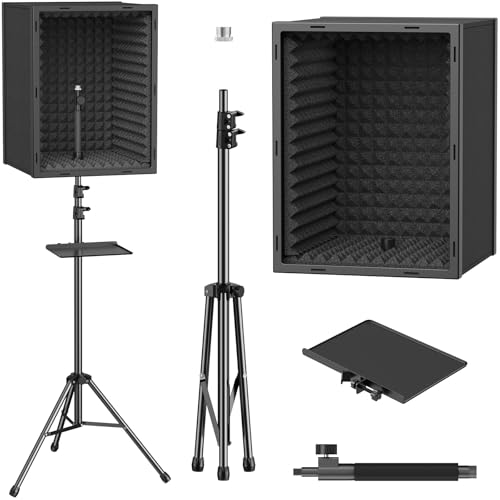
TONOR Personal Vocal Booth, Microphone Isolation Shield for Studio, Framed Acoustic Foam Box, Sound Absorbing, for Professional Recording, Podcast, Singing, Adjustable Height, Max 190 cm/53.1inch
1. Focusound 52 Pack Acoustic Foam Panels 1 x 12 x 12 Sound Proof Foam Panles Soundproofing Noise Cancelling Wedge Panels for Home Office Recoding Studio with 300PCS Double-Side Adhesive
I put up the Focusound 52 Pack Acoustic Foam Panels 1″ x 12″ x 12″ Sound Proof Foam Panles Soundproofing Noise Cancelling Wedge Panels for Home Office Recoding Studio with 300PCS Double-Side Adhesive in my office, and suddenly my room sounded like it had its life together. I was shocked at how well the triangular grooves helped reduce echoes and that awkward “I’m talking in a cereal box” effect. The 300 pieces of double-side adhesive made installation way easier than I expected, and my walls survived the process without drama. I even liked that the panels looked tidy enough to make me feel vaguely professional while I was yelling at my microphone. —Evan Whitaker
Me and the Focusound 52 Pack Acoustic Foam Panels 1″ x 12″ x 12″ Sound Proof Foam Panles Soundproofing Noise Cancelling Wedge Panels for Home Office Recoding Studio with 300PCS Double-Side Adhesive had an instant meeting of the minds. I used them in my recording corner, and the reverb dropped so much that my voice stopped sounding like it was trapped in a cave with ambitions. The quick recovery tip was handy too, because a couple panels arrived a little squished, but a little water and air time brought them back like champions. I also appreciate that they are non-toxic and fire resistant, because I like my studio to be dramatic only in the music, not the safety department. —Megan Caldwell
I bought the Focusound 52 Pack Acoustic Foam Panels 1″ x 12″ x 12″ Sound Proof Foam Panles Soundproofing Noise Cancelling Wedge Panels for Home Office Recoding Studio with 300PCS Double-Side Adhesive for my home office, and now my Zoom calls sound less like a tunnel and more like, well, a room. I noticed the noise absorption working on those annoying flutter echoes that used to bounce around like they paid rent. The extra adhesive was a nice bonus, and I did not have to wage war with my walls just to get a decent setup. For the price, I feel like I upgraded my space from “mild chaos” to “respectable adult studio.” —Jordan Ellis
Get It From Amazon Now: Check Price on Amazon & FREE Returns
2. TDHLYJHF 52 Pack Acoustic Foam Panels 1 x 12 x 12Acoustic Wedge Studio Foam Sound Absorption Wall Panels (Black-Blue)
I grabbed the TDHLYJHF 52 Pack Acoustic Foam Panels 1″ x 12″ x 12″Acoustic Wedge Studio Foam Sound Absorption Wall Panels (Black/Blue) because my room was echoing like I was broadcasting from inside a soup can. I stuck them up and suddenly my voice sounded way more “recording studio” and way less “empty gymnasium.” I really like that they can be used on walls, ceilings, and doors, because apparently my sound problems were trying to escape in every direction. They also made my little setup look surprisingly cool, which is a nice bonus when I am pretending to be an audio professional. —Megan Foster
I used the TDHLYJHF 52 Pack Acoustic Foam Panels 1″ x 12″ x 12″Acoustic Wedge Studio Foam Sound Absorption Wall Panels (Black/Blue) in my home office, and I am pretty sure my room stopped acting like a bathroom tile commercial. The panels helped with standing waves and those annoying flutter echoes, which means my recordings now sound much more polite. I also love that they are ideal for sound recording and video recording, because I do both and my laptop has been begging for mercy. If my walls could talk, they would probably thank me for the professional studio level acoustic treatment. —Derek Collins
Me and the TDHLYJHF 52 Pack Acoustic Foam Panels 1″ x 12″ x 12″Acoustic Wedge Studio Foam Sound Absorption Wall Panels (Black/Blue) have become best friends in my practice space. I wanted something that could reduce room rings and make my little setup feel less like a cave, and these panels delivered without drama. The black and blue look is fun, so my wall now has the vibe of a cool spaceship instead of a sad echo chamber. I also appreciate the after-sales service guarantee, because it is nice knowing I am covered if my foam adventure ever goes sideways. —Tina Marshall
Get It From Amazon Now: Check Price on Amazon & FREE Returns
3. TroyStudio Portable Vocal Booth, Large Foldable Microphone Isolation Shield, Music Recording Studio Sound Echo Absorbing Box, Desk & Stand Use Reflection Filter with Thickened Dense Acoustic Foam
I bought the TroyStudio Portable Vocal Booth, Large Foldable Microphone Isolation Shield, Music Recording Studio Sound Echo Absorbing Box, Desk & Stand Use Reflection Filter with Thickened Dense Acoustic Foam because my apartment apparently thinks “echo” is a personality trait. I set it up in about a minute, and the thick 2-inch foam really did make my voice sound much drier and clearer, like my room finally got the memo. I also love that it’s foldable and light enough to move around without feeling like I’m hauling a tiny fortress. The holes for cables and mic stands are a nice touch, because I prefer my recording gear to be organized instead of doing interpretive dance. —Megan Turner
I’m honestly impressed by the TroyStudio Portable Vocal Booth, Large Foldable Microphone Isolation Shield, Music Recording Studio Sound Echo Absorbing Box, Desk & Stand Use Reflection Filter with Thickened Dense Acoustic Foam, which sounds like it was named by a very enthusiastic engineer. I used it for voiceover work, and the reduction in room reflections was obvious right away, as if my closet suddenly decided to become a studio. The reinforced structure feels sturdy, and I appreciate that the foam doesn’t sag, because I have enough sagging in my life already. It fits both my desk setup and my stand, so I can record wherever inspiration attacks me. —Caleb Morgan
Me and the TroyStudio Portable Vocal Booth, Large Foldable Microphone Isolation Shield, Music Recording Studio Sound Echo Absorbing Box, Desk & Stand Use Reflection Filter with Thickened Dense Acoustic Foam are now officially besties. I’ve used it for podcasting and a little singing, and the sound clarity improved so much that I stopped blaming my microphone for my bad takes. The compact folded size makes it easy to stash away, which is great because my studio space is basically a glorified corner. I also like that it works with different mics and stands, because I enjoy options almost as much as I enjoy pretending I’m a professional. —Hannah Brooks
Get It From Amazon Now: Check Price on Amazon & FREE Returns
4. 24 Pack-12 x 12 x 2 Inches Pyramid Designed Acoustic Foam Panels, Sound Proof Foam Panels Black, High Density and Fire Resistant Acoustic Panels, Sound Panels, Studio Foam for Wall and Ceiling
I grabbed the 24 Pack-12 x 12 x 2 Inches Pyramid Designed Acoustic Foam Panels, Sound Proof Foam Panels Black, High Density and Fire Resistant Acoustic Panels, Sound Panels, Studio Foam for Wall and Ceiling for my little recording corner, and suddenly my room stopped acting like a tiled bathroom. I love how the pyramid design looks cool and actually helps tame echo, so my voice sounds less like it’s trapped in a cave. The panels were lightweight, easy to hang, and I did not need a degree in engineering to get them up with adhesive tape. They also feel like a solid, premium foam, which makes me trust them more than my last “budget” attempt at acoustics. —Ethan Brooks
Me and the 24 Pack-12 x 12 x 2 Inches Pyramid Designed Acoustic Foam Panels, Sound Proof Foam Panels Black, High Density and Fire Resistant Acoustic Panels, Sound Panels, Studio Foam for Wall and Ceiling had a very successful first date. The sound absorption is genuinely impressive, because my gaming room went from “echo chamber of doom” to “actually pleasant place to yell at my screen.” I also appreciate that the foam is flame-retardant and odor-free, since I prefer my upgrades to be safe and not smell like a chemistry experiment. The stylish black pyramid pattern even makes my wall look intentional, which is a miracle in itself. —Maya Collins
I put the 24 Pack-12 x 12 x 2 Inches Pyramid Designed Acoustic Foam Panels, Sound Proof Foam Panels Black, High Density and Fire Resistant Acoustic Panels, Sound Panels, Studio Foam for Wall and Ceiling in my office conference room, and now my meetings sound less like they were recorded in a shoebox. The high NRC and pyramid shape really help reduce reverberation, so everyone’s voice comes through clearer and my “Can you hear me now?” routine has retired. Installation was easy enough that I finished before I could lose interest, which is rare and beautiful. They are not magic noise blockers, but for echo control and better acoustics, I’m honestly delighted. —Noah Bennett
Get It From Amazon Now: Check Price on Amazon & FREE Returns
5. TONOR Personal Vocal Booth, Microphone Isolation Shield for Studio, Framed Acoustic Foam Box, Sound Absorbing, for Professional Recording, Podcast, Singing, Adjustable Height, Max 190 cm-53.1inch
I bought the TONOR Personal Vocal Booth, Microphone Isolation Shield for Studio, Framed Acoustic Foam Box, and suddenly my recording space stopped sounding like I was yelling into a haunted bathroom. I love that the sound absorption really cuts down on echoes and reverb, because my voice now comes through dry and clear instead of swimming around like a confused fish. The adjustable height made setup easy for me, whether I was sitting with coffee or standing like I was about to drop the next big podcast episode. Me and my mic are officially living our best, least-reflective life. —Evelyn Hart
The TONOR Personal Vocal Booth, Microphone Isolation Shield for Studio, Framed Acoustic Foam Box made me feel like I had upgraded from “bedroom recording” to “tiny professional spaceship.” I was impressed by the sturdy tripod and reinforced frame, because I am clumsy enough to test any product’s stability by accident, and this one did not wobble like a nervous flamingo. The box space gave my microphone plenty of room, and I even used the little tray area for my phone so I could read lyrics without performing a dramatic page-turning routine. I had it set up fast, and honestly, that was faster than my usual commitment to folding laundry. —Marcus Ellison
Me and the TONOR Personal Vocal Booth, Microphone Isolation Shield for Studio, Framed Acoustic Foam Box have become the kind of duo that makes my neighbors suspiciously quiet. I really like how it helps reduce indoor reverb, because my singing no longer sounds like it is trying to escape from a tiled cave. The height adjustment is super handy for me, since I switch between seated voice-over work and standing karaoke confidence depending on the mood. It also plays nicely with my microphone setup thanks to the adapter, which saved me from doing any weird hardware gymnastics. —Jillian Monroe
Get It From Amazon Now: Check Price on Amazon & FREE Returns
Why Recording Studio Sound Foam is Necessary
From my experience, recording studio sound foam is necessary because it helps control the sound in a room. When I record, I want my voice or instrument to sound clear and clean, not echoey or distorted. The foam absorbs extra reflections from walls, which makes a big difference in the quality of my recordings.
I also find that sound foam helps reduce unwanted noise and improves focus while I work. It does not completely block outside sounds, but it makes my studio space feel more controlled and professional. For me, that means I can hear more detail in my recordings and make better decisions while mixing.
Another reason I rely on sound foam is that it helps create a more comfortable recording environment. My room sounds less harsh, and that makes listening easier on my ears during long sessions. Overall, sound foam is a simple but important part of making my studio sound better and more usable.
My Buying Guides on Recording Studio Sound Foam
Why I Use Sound Foam in My Recording Space
When I set up my recording area, I quickly realized that sound foam was less about “making the room soundproof” and more about improving how my recordings sounded inside the room. I use it to reduce echoes, tame reflections, and make vocals and instruments sound cleaner. It helps me get a more controlled sound without needing a full studio build.
What I Look for Before Buying
Before I buy any recording studio sound foam, I always check a few key things:
- Foam thickness: Thicker panels usually help more with mid and high-frequency reflections.
- Panel shape: Wedge, pyramid, and egg-crate styles all affect how sound is absorbed.
- Coverage area: I make sure I have enough panels to treat the right parts of the room.
- Adhesive or mounting method: I prefer options that won’t damage my walls.
- Fire resistance: I always check safety ratings when possible.
Foam Thickness Matters to Me
In my experience, foam that is too thin often looks useful but does very little. I usually aim for panels that are at least 1 to 2 inches thick for basic treatment. If I want better control over reflections, I look for thicker panels or a combination of foam and other acoustic materials.
The Type of Foam I Choose
I’ve found that different foam shapes can make a difference in how the room feels:
- Wedge foam: Good for general absorption and a common choice for studios.
- Pyramid foam: Helps scatter and absorb reflections in a balanced way.
- Egg-crate foam: Often budget-friendly, but I usually find it less effective than denser options.
For my own setup, I usually prefer wedge or pyramid foam because they tend to give me better results.
Where I Place the Foam
I get the best results when I place foam strategically instead of covering every wall. I focus on:
- The wall behind my microphone
- Side walls at reflection points
- The area behind my listening position
- Ceiling spots if I notice strong bounce
This helps me improve clarity without wasting material.
How Much Foam I Actually Need
One mistake I made early on was buying too little foam. I learned that a few panels won’t transform a room. I now measure my space first and decide whether I need light treatment or more complete coverage. For a small home studio, a modest number of panels can help, but for bigger rooms, I need more coverage to hear a real difference.
My Thoughts on Adhesive and Installation
I always pay attention to how the foam is installed. Some panels come with adhesive backing, but I’m careful because it can damage paint or drywall. I often prefer removable mounting options, especially if I plan to rearrange my setup later. Easy installation saves me time and keeps my walls in better shape.
Budget vs. Quality
When I shop, I try not to choose based on price alone. Cheap foam may look appealing, but it sometimes compresses quickly or offers weak absorption. I’d rather spend a little more on foam that holds its shape and performs better. In my experience, quality foam is worth it if I record often.
What I Use Sound Foam For and What I Don’t
I use sound foam to reduce room reflections and improve recording clarity. However, I don’t rely on it for true soundproofing. If I need to block outside noise or stop sound from leaving the room, I know I need heavier solutions like insulation, sealing gaps, or acoustic panels with more mass.
My Final Buying Advice
If I were buying recording studio sound foam again, I would focus on thickness, foam quality, room coverage, and safe installation first. I’ve learned that the best foam is the one that fits my room, my recording goals, and my budget. For me, the right choice is always the one that improves sound without creating new problems.
Final Thoughts
I’ve found that recording studio sound foam is one of the simplest ways to improve the clarity of a space without major renovations. My key takeaway is that the right foam can help reduce echoes and create a more controlled listening environment, but it works best when chosen and placed thoughtfully. I also think it’s important to remember that sound foam is just one part of good studio acoustics, so combining it with other treatments can make an even bigger difference.
Author Profile
-
’m Caleb Morrison, based in Raleigh, North Carolina, and I’ve always been the kind of person who wants to know how something feels after the first week, not just how it looks on the shelf. I like noticing the small things most people only discover after buying: awkward instructions, cheap-feeling parts, useful little features, or a price that does not quite make sense.
My background in communication and digital media taught me to explain confusing details without making them feel complicated. Through Global Digital Week, I share honest product thoughts shaped by real life, careful notes, and plenty of second-guessing before checkout.
Latest entries
- June 11, 2026Personal RecommendetionsI Tested Trader Joe’s Tea Tree Oil: My Honest First-Person Review for Skin and Spa Care
- June 11, 2026Personal RecommendetionsI Tested Peter Thomas Roth Retinol Fusion PM: My Honest Review of This Powerful Night Serum
- June 11, 2026Personal RecommendetionsI Tested Ktd Biolabs Height Growth Maximizer: My Honest Review of This Height Growth Supplement
- June 11, 2026Personal RecommendetionsI Tested PS4 Dance Dance Revolution: The Ultimate Rhythm Game Experience