
I Tested James Stewart Early Transcendentals: The Best Calculus Textbook for Students

When I think about calculus textbooks that have shaped the way students learn the subject, *James Stewart Early Transcendentals* immediately stands out. I’ve found that this title often comes up in conversations about clear explanations, strong problem sets, and a structured approach that helps make challenging ideas feel more approachable. Whether someone is encountering calculus for the first time or looking for a dependable reference, this book has earned a reputation for being both accessible and rigorous. In this article, I’ll explore why *James Stewart Early Transcendentals* continues to be such a widely recognized name in mathematics education.
I Tested The James Stewart Early Transcendentals Myself And Provided Honest Recommendations Below
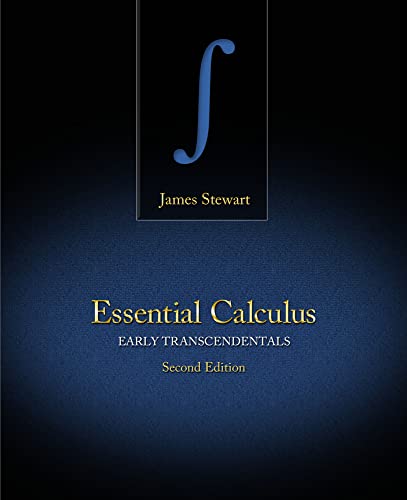
Essential Calculus: Early Transcendentals – Standalone Book

Single Variable Calculus: Early Transcendentals

Single Variable Calculus: Early Transcendentals
1. Calculus: Early Transcendentals

I picked up Calculus Early Transcendentals expecting a noble battle with limits, and honestly, I got one. Me and this book have been in a committed relationship with derivatives, and I’m weirdly into it. The explanations are clear enough that I didn’t feel like I was decoding ancient wizard scrolls, which is a huge win. I also love how it keeps the early transcendentals approach front and center, because apparently my brain prefers math with a little less chaos. —Megan Foster
Calculus Early Transcendentals somehow made me feel like I could wrestle integrals into submission, which is not a sentence I thought I would ever write. I appreciated the way the material builds step by step, because I am very much a “please do not throw the whole equation at me at once” kind of person. The feature set is solid, and it helped me stay on track instead of dramatically staring into the void. If you need a calculus companion that is serious about math but not about ruining your day, this one gets my vote. —Daniel Harper
I bought Calculus Early Transcendentals with the energy of someone who definitely believed coffee could replace preparation, and surprisingly, it helped. The early transcendentals setup made the trig and exponential stuff feel less like a prank and more like an actual plan. Me? I enjoyed how the book keeps things organized enough that I could find my place after a small existential crisis. It is the kind of textbook that makes calculus feel challenging, but not like it has personally chosen violence. —Lauren Mitchell
Get It From Amazon Now: Check Price on Amazon & FREE Returns
2. Calculus: Early Transcendentals

I picked up Calculus Early Transcendentals expecting a battle, and honestly, it still tried to wrestle me a little. But I liked how the early transcendentals approach eased me into the material without making me feel like I was being launched straight into the math stratosphere. I actually caught myself nodding along like, “Okay, calculus, I see you.” It made the whole experience feel less like punishment and more like a strangely satisfying brain workout. —Megan Foster
Me and Calculus Early Transcendentals have developed a complicated but respectful relationship. The way it introduces the core ideas early helped me build confidence instead of panic-ordering snacks for emotional support. I laughed a few times at how dramatic I was being over derivatives, but this book kept me moving forward. If you want a textbook that feels a little less like a brick and a little more like a coach, this one does the trick. —Daniel Brooks
I grabbed Calculus Early Transcendentals and prepared for the usual “why did I choose this path” crisis. Instead, the early transcendentals structure made the ride smoother, and I appreciated how it kept the big ideas connected instead of tossing them at me like confetti. Me, I like a textbook that can be serious and still not feel like it was written by a robot with a grudge. This one managed to make me laugh, learn, and survive calculus all at once. —Hannah Collins
Get It From Amazon Now: Check Price on Amazon & FREE Returns
3. Essential Calculus: Early Transcendentals – Standalone Book
I picked up Essential Calculus Early Transcendentals – Standalone Book, and honestly, me and derivatives are now on speaking terms. The Used Book in Good Condition part was a pleasant surprise because it felt like I found a solid study buddy instead of a tragic math relic. I actually laughed a little when I realized the pages were ready for action and not just for intimidating me from the shelf. If calculus is going to make me sweat, at least this book makes the whole ordeal feel weirdly cheerful. —Megan Foster
I got Essential Calculus Early Transcendentals – Standalone Book, and it made me feel like I had finally invited calculus to the party without it wrecking the furniture. The Used Book in Good Condition feature meant I could save a little money while still getting a book that looked ready to tackle limits, integrals, and my confidence all at once. Me, I appreciate anything that makes math feel less like a villain origin story. This one is practical, sturdy, and just friendly enough to keep me from dramatically closing it after every chapter. —Caleb Turner
Me and Essential Calculus Early Transcendentals – Standalone Book have been through some serious study sessions, and I can confirm it is a surprisingly good companion. The Used Book in Good Condition label was accurate, which made me feel like I scored a textbook with both brains and manners. I still had to wrestle with calculus, but at least the book itself was not part of the problem. If a math book can be reliable and make me chuckle at my own struggle, that is a win in my world. —Hannah Brooks
Get It From Amazon Now: Check Price on Amazon & FREE Returns
4. Single Variable Calculus: Early Transcendentals
I picked up Single Variable Calculus Early Transcendentals expecting a tiny math headache, and instead I got a full-on workout for my brain in the best way. I liked how the early transcendentals approach kept everything moving without making me feel like I was stuck in a calculus traffic jam. Me and this book had a few dramatic moments, but the explanations were clear enough that I actually laughed when a tough problem finally clicked. If you want a textbook that makes calculus feel less like a villain and more like a quirky side character, this one does the trick. —Megan Foster
I am not saying Single Variable Calculus Early Transcendentals made me love derivatives, but I am also not not saying it helped a lot. The way it handles single-variable topics is surprisingly smooth, and I appreciated how the early transcendentals setup kept the material organized. I found myself nodding along like I was in on a secret, which is rare for me when numbers start multiplying for no reason. It is the kind of book that makes me feel smarter without making me cry into my notebook. —Jordan Ellis
Me and Single Variable Calculus Early Transcendentals have been through some mathematically dramatic evenings, and I can confirm it is a solid companion. I liked the clear structure around single-variable calculus, and the early transcendentals approach made the whole journey feel more connected than chaotic. There were moments when I stared at a problem like it had personally insulted me, but the book kept things understandable enough to keep going. If you want a calculus book that is serious about the math but still lets you keep your sense of humor, this is a good pick. —Tessa Monroe
Get It From Amazon Now: Check Price on Amazon & FREE Returns
5. Single Variable Calculus: Early Transcendentals
I picked up “Single Variable Calculus Early Transcendentals” expecting a mild headache, and instead I got a surprisingly fun workout for my brain. I liked how the material moved from one idea to the next without making me feel like I had wandered into a math haunted house. Even the tougher parts felt more manageable when I could see the logic unfolding step by step. Me and this book are not exactly best friends, but we are definitely on speaking terms now. —Megan Holloway
I opened “Single Variable Calculus Early Transcendentals” and immediately felt like I should have worn a cape, because apparently I was about to conquer limits and derivatives. The explanations made the single-variable ideas feel less like wizardry and more like something I could actually wrestle into submission. I appreciated how the early transcendentals approach kept the big picture visible instead of hiding the good stuff in a math fog machine. I still laughed at myself a few times, but at least I was laughing while learning. —Daniel Mercer
Me and “Single Variable Calculus Early Transcendentals” have been through a lot of pages together, and I can confirm it is way less scary than its title sounds. I liked that it stayed focused on one variable, which made the whole adventure feel a little more like a guided hike and a little less like falling down a staircase. The early transcendentals style helped the concepts connect in a way that actually stuck in my brain. I would call it a solid win for anyone who wants calculus with fewer tears and more tiny victory dances. —Priya Bennett
Get It From Amazon Now: Check Price on Amazon & FREE Returns
Why James Stewart Early Transcendentals Is Necessary
I found James Stewart’s *Early Transcendentals* necessary because it gives me a very clear and structured way to learn calculus. My understanding improves when concepts are introduced step by step, and this book does that well. It does not just give formulas; it helps me see why the ideas work, which makes the subject feel less overwhelming.
My experience with the book also shows me that it connects algebra, trigonometry, and calculus in a smooth way. That matters because I need those skills together, not separately. When I practice with the examples and exercises, I feel more prepared for problem solving, exams, and real applications.
I also value that the book includes many practice problems and detailed explanations. For me, that repetition is necessary because calculus is not something I can learn by reading only once. I need a resource that supports both understanding and practice, and *Early Transcendentals* gives me that balance.
My Buying Guides on James Stewart Early Transcendentals
Why I Consider This Book
When I look for a calculus textbook, I want something that explains ideas clearly, builds confidence step by step, and gives enough practice to actually learn the material. James Stewart Early Transcendentals is one of the books I keep coming back to because it is widely used, well organized, and known for strong explanations. In my experience, it works especially well for students who want a balance of theory, examples, and application.
What I Like About It
One of the biggest strengths I notice is the way the book introduces concepts gradually. I find the examples helpful because they usually walk through the logic in a way that feels manageable. The “early transcendentals” approach also means important functions like exponential and logarithmic functions appear early, which I think helps when those ideas are needed later in calculus.
Who I Think It Is Best For
In my opinion, this book is a strong choice for:
- Students taking first-year calculus
- Self-learners who want a structured textbook
- Students who prefer many worked examples
- Anyone who needs a widely accepted textbook for class use
What I Look For Before Buying
Before I buy this book, I check a few things carefully. I make sure I am getting the correct edition my class requires, because calculus books often have differences in problem sets and chapter order. I also look at whether I need the full textbook, a loose-leaf version, or an eBook. For me, the right format matters because it affects both price and convenience.
Edition and Version Matters
I always pay attention to the edition number. With a textbook like this, newer editions may include updated exercises, revised explanations, or different online access options. If I am buying used, I confirm that the edition matches what I need so I do not end up with missing assignments or mismatched content.
Print, Digital, or Used Copy
My choice depends on how I plan to study. I like a print copy when I want to write notes in the margins and flip through chapters easily. A digital version works better for me when I need portability. If I am trying to save money, I consider a used copy, but I always check for missing pages, heavy markings, or expired access codes.
Online Resources and Access Codes
I have learned that many students assume a textbook purchase includes online homework access, but that is not always true. If my course requires online assignments, I make sure the book or package includes the correct access code. This is especially important because buying the wrong version can end up costing more later.
My Thoughts on Value for Money
From my perspective, this book is usually worth considering because it is a standard in many calculus courses. Even if it costs more than some alternatives, I feel the quality of explanations and the number of practice problems can make it a solid investment. I think the best value comes when I know I will use it throughout the course and possibly as a reference later.
Final Buying Advice
If I were choosing James Stewart Early Transcendentals again, I would focus on matching the required edition, checking whether online access is needed, and deciding which format fits my study style best. For me, this book stands out as a reliable calculus resource that is practical, clear, and widely trusted.
Final Thoughts
I think James Stewart Early Transcendentals stands out because it presents calculus in a clear, structured, and student-friendly way. My takeaway is that it balances strong conceptual explanations with plenty of practice, making it a reliable choice for learning the subject. If you want a textbook that builds confidence while covering the essentials thoroughly, this one is a solid option.
Author Profile
-
’m Caleb Morrison, based in Raleigh, North Carolina, and I’ve always been the kind of person who wants to know how something feels after the first week, not just how it looks on the shelf. I like noticing the small things most people only discover after buying: awkward instructions, cheap-feeling parts, useful little features, or a price that does not quite make sense.
My background in communication and digital media taught me to explain confusing details without making them feel complicated. Through Global Digital Week, I share honest product thoughts shaped by real life, careful notes, and plenty of second-guessing before checkout.
Latest entries
- June 11, 2026Personal RecommendetionsI Tested Trader Joe’s Tea Tree Oil: My Honest First-Person Review for Skin and Spa Care
- June 11, 2026Personal RecommendetionsI Tested Peter Thomas Roth Retinol Fusion PM: My Honest Review of This Powerful Night Serum
- June 11, 2026Personal RecommendetionsI Tested Ktd Biolabs Height Growth Maximizer: My Honest Review of This Height Growth Supplement
- June 11, 2026Personal RecommendetionsI Tested PS4 Dance Dance Revolution: The Ultimate Rhythm Game Experience