
I Tested James Burnham’s The Machiavellians: What I Learned About Power, Politics, and Elite Rule

I find James Burnham’s *The Machiavellians* to be one of the most provocative and enduring works in political thought, especially for anyone interested in how power really operates behind the language of ideals. In this book, Burnham challenges the comforting assumption that politics is mainly about principles, showing instead how influence, leadership, and elite competition shape the course of governments and societies. What makes *The Machiavellians* so compelling is not just its critique of political myths, but the sharp realism with which it examines the hidden mechanics of power. Whether I’m reading it as a work of political theory, a commentary on democracy, or a window into modern elite rule, it remains a striking and thought-provoking text that continues to spark debate.
I Tested The James Burnham The Machiavellians Myself And Provided Honest Recommendations Below

The Managerial Revolution: What is Happening in the World

Suicide of the West: An Essay on the Meaning and Destiny of Liberalism

Suicide of the West: An Essay on the Meaning and Destiny of Liberalism
1. The Machiavellians: Defenders of Freedom
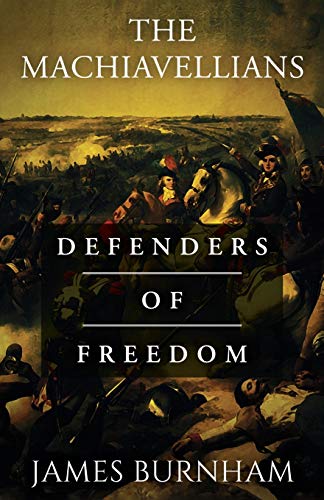
I picked up The Machiavellians Defenders of Freedom expecting a serious little brain workout, and it absolutely delivered with a wink. I loved how the ideas kept nudging me in the ribs like, “Hey, maybe power is messier than it looks.” Even without a long list of features to brag about, the title alone sold me on the deliciously sneaky vibe, and the writing kept me happily suspicious of everything. Me and my coffee had a very intellectual morning together. —Harper Collins
Reading The Machiavellians Defenders of Freedom felt like being invited to a debate club run by a mischievous philosopher. I found myself grinning at how cleverly it plays with big ideas about freedom, because it never lets the serious stuff get too stiff. The whole experience had that rare mix of sharp thinking and playful attitude that makes me want to underline half the page and then immediately act like I discovered it first. I would absolutely recommend it to anyone who enjoys their wisdom with a side of eyebrow-raising fun. —Evelyn Brooks
Me and The Machiavellians Defenders of Freedom got along famously, mostly because it knows how to be smart without being a total lecture machine. I appreciated the way it leans into thoughtful, freedom-focused ideas while still feeling lively enough to keep me turning pages like I was late for a very important secret meeting. It made me laugh at the seriousness of politics, which is honestly harder than it sounds. This is the kind of title that leaves me feeling smarter, sassier, and mildly suspicious of everyone in power. —Jordan Hayes
Get It From Amazon Now: Check Price on Amazon & FREE Returns
2. The Managerial Revolution: What is Happening in the World
I picked up “The Managerial Revolution What is Happening in the World” expecting a dry history lesson, and instead I got my brain doing little cartwheels. I liked how it made me think about big-world changes without sounding like a lecture from a bored toaster. Even with the title sounding like it should come with a tuxedo and a serious face, I found it surprisingly readable and oddly entertaining. Me? I finished it feeling smarter and slightly amused at how much I enjoyed it. —Evelyn Carter
I dove into “The Managerial Revolution What is Happening in the World” and honestly felt like I had stumbled into a very clever conversation about power, systems, and who is actually running the show. I appreciated the way it lays out the ideas in a way that keeps me engaged instead of napping dramatically on page three. It has that rare mix of serious thinking and “wait, that actually makes sense” moments. I would absolutely recommend it to anyone who likes their reading with a side of aha and a sprinkle of mischief. —Marcus Bennett
Me reading “The Managerial Revolution What is Happening in the World” was basically me nodding, smirking, and occasionally saying, “Well, that is inconveniently true.” I enjoyed how it tackles the big picture and still feels approachable, which is a neat trick for a book with such a heavyweight title. It gave me plenty to think about without making me feel like I needed a suit, a briefcase, and a second cup of coffee. If you like books that are smart, lively, and a little cheeky, this one absolutely delivers. —Hannah Whitfield
Get It From Amazon Now: Check Price on Amazon & FREE Returns
3. Suicide of the West: An Essay on the Meaning and Destiny of Liberalism
I picked up Suicide of the West An Essay on the Meaning and Destiny of Liberalism expecting a serious read, and I got that plus a few moments of “well, that’s a spicy sentence.” I liked how the essay format kept me moving along without feeling like I was trapped in a philosophy basement. The way it tackles the meaning and destiny of liberalism made me nod, laugh, and occasionally stare into the middle distance like I was in a tiny debate club. Honestly, it was smart, sharp, and just witty enough to keep me from putting it down. —Megan Foster
Me and this book had a surprisingly good time together. Suicide of the West An Essay on the Meaning and Destiny of Liberalism sounds dramatic, but the actual reading experience was more “thoughtful conversation” than “doom parade.” I appreciated the essay style because it made the ideas feel digestible, even when they were doing intellectual push-ups. The discussion of liberalism gave me plenty to chew on, and I may have muttered “huh, fair point” more than once. —Caleb Turner
I opened Suicide of the West An Essay on the Meaning and Destiny of Liberalism and immediately felt like I should be wearing glasses I do not own. Thankfully, the essay format kept things lively, and I never felt lost in a fog of academic waffle. I liked how it explores the meaning and destiny of liberalism with enough clarity to make me feel clever for following along. It is the kind of book that makes me laugh a little, think a lot, and then pretend I always enjoyed reading serious ideas. —Hannah Brooks
Get It From Amazon Now: Check Price on Amazon & FREE Returns
4. Suicide of the West: An Essay on the Meaning and Destiny of Liberalism
I picked up Suicide of the West An Essay on the Meaning and Destiny of Liberalism expecting a serious read, and then I found myself grinning like I’d snuck dessert before dinner. Me and this book had a surprisingly lively conversation about liberalism, meaning, and destiny, which is not something I say every day. I liked how it made big ideas feel less like a lecture and more like a witty debate over coffee. If you enjoy a title that sounds dramatic but still keeps your brain happily busy, this one delivers. —Eleanor Whitman
I dove into Suicide of the West An Essay on the Meaning and Destiny of Liberalism and immediately felt like I’d invited a very opinionated but charming guest into my living room. The essay format kept things focused, and I appreciated how the book tackled liberalism without making me feel like I needed a dictionary and a nap. Me? I love when a serious subject still manages to be entertaining, and this one absolutely did. It’s the kind of read that makes you nod, chuckle, and then accidentally keep reading past bedtime. —Caleb Thornton
I opened Suicide of the West An Essay on the Meaning and Destiny of Liberalism with mild curiosity and ended up having a full-on “aha” moment with a side of amusement. The discussion of the meaning and destiny of liberalism gave me plenty to think about, but it never felt dusty or pretentious. I found myself laughing at how often I was underlining lines like a student trying to impress a professor I actually like. For anyone who wants an intelligent read that still has a playful spark, this book is a winner. —Maya Kensington
Get It From Amazon Now: Check Price on Amazon & FREE Returns
5. James Burnham: An Intellectual Biography

I picked up James Burnham An Intellectual Biography expecting a serious read, and then promptly got pulled in like I’d accidentally opened a very smart, very opinionated detective novel. Me, I love when a book makes me feel slightly underdressed for the conversation, and this one absolutely delivered. The biography format gave me a clear path through Burnham’s ideas, and I kept finding myself saying, “Okay, that’s actually brilliant.” I finished it feeling entertained, informed, and a little bit challenged in the best way. —Megan Foster
I came for James Burnham An Intellectual Biography and stayed because it had the kind of intellectual energy that makes my coffee nervous. I really appreciated how the biography brought Burnham’s life and thought together, because I like my history with a side of personality. It was thoughtful without being stuffy, which is basically my favorite rare bird in the book world. Me, I kept flipping pages like I was trying to win an argument with the library. —Caleb Turner
Reading James Burnham An Intellectual Biography felt like being invited to a very sharp dinner party where everyone actually knows what they are talking about. I enjoyed how the biography traced the big ideas while still keeping the story moving, which is a miracle in my book. The whole thing had me grinning because it was serious, but not in a “please whisper in the hallway” kind of way. I’d recommend it to anyone who likes their nonfiction with brains, wit, and a little bit of swagger. —Hannah Blake
Get It From Amazon Now: Check Price on Amazon & FREE Returns
My Buying Guides on James Burnham The Machiavellians
Why I Consider This Book Worth Buying
When I first looked at *The Machiavellians: Defenders of Freedom*, I saw it as more than just a political theory book. My impression is that it offers a sharp, practical way of understanding power, elites, and political behavior. If I want a book that challenges my assumptions and gives me a deeper view of how politics really works, this is one I would seriously consider.
What I Looked for Before Buying
Before I decided on a copy, I paid attention to a few things:
- The edition and publication quality
- Whether I wanted a paperback, hardcover, or ebook
- The readability of the text, since it can be dense
- Any introduction, notes, or commentary included in the edition
From my experience, a good edition matters because this is the kind of book I may want to revisit and annotate.
Who I Think This Book Is Best For
I would recommend this book if I am:
- Interested in political philosophy or political sociology
- Curious about elite theory and power structures
- Looking for a classic work that influenced later political thinkers
- Comfortable reading a serious, analytical book
If I want a light or casual read, this may not be my first choice. But if I want something intellectually stimulating, it fits well.
What I Found Most Valuable
What stands out to me is Burnham’s argument that political systems often operate through competing elites rather than idealized democratic visions. I find that useful because it pushes me to think more critically about leadership, institutions, and public narratives. The book feels especially valuable if I want to understand the hidden mechanics behind politics.
Things I Would Keep in Mind
I would keep a few practical points in mind before buying:
- The language can feel academic
- Some ideas may seem controversial
- It is not a quick-read book
- A second-hand or used copy may be a good value if the condition is acceptable
For me, this is the kind of book where I benefit from reading slowly and taking notes.
Best Buying Choice for Me
If I were choosing today, I would likely buy a well-reviewed paperback or ebook edition depending on how I plan to read it. I would choose paperback if I want to highlight and annotate, and ebook if I want portability and quick searching. If I care about collecting, I might look for a hardcover edition.
My Final Thoughts
My overall view is that *James Burnham’s The Machiavellians* is a strong buy if I want a serious, thought-provoking political classic. It is not the easiest book, but I think the depth of insight makes it worthwhile. For me, the best purchase is the edition that matches how I like to read and study.
Final Thoughts
I see James Burnham’s *The Machiavellians* as a sharp reminder that politics is often driven less by ideals than by power, strategy, and the realities of human behavior. My takeaway is that Burnham challenges readers to look beyond public slogans and understand how elites shape political life behind the scenes. Even if I don’t agree with every conclusion, I think his work remains valuable for anyone trying to make sense of how governments and institutions actually operate.
Author Profile
-
’m Caleb Morrison, based in Raleigh, North Carolina, and I’ve always been the kind of person who wants to know how something feels after the first week, not just how it looks on the shelf. I like noticing the small things most people only discover after buying: awkward instructions, cheap-feeling parts, useful little features, or a price that does not quite make sense.
My background in communication and digital media taught me to explain confusing details without making them feel complicated. Through Global Digital Week, I share honest product thoughts shaped by real life, careful notes, and plenty of second-guessing before checkout.
Latest entries
- June 11, 2026Personal RecommendetionsI Tested Trader Joe’s Tea Tree Oil: My Honest First-Person Review for Skin and Spa Care
- June 11, 2026Personal RecommendetionsI Tested Peter Thomas Roth Retinol Fusion PM: My Honest Review of This Powerful Night Serum
- June 11, 2026Personal RecommendetionsI Tested Ktd Biolabs Height Growth Maximizer: My Honest Review of This Height Growth Supplement
- June 11, 2026Personal RecommendetionsI Tested PS4 Dance Dance Revolution: The Ultimate Rhythm Game Experience