
I Tested an Intelligent O2 Sensor Simulator: My First-Hand Experience and Results

I’ve always been fascinated by the way modern vehicles and diagnostic systems rely on precise sensor data to keep everything running efficiently, and the Intelligent O2 Sensor Simulator is a perfect example of that innovation in action. At its core, this technology is designed to mimic the behavior of an oxygen sensor with a level of accuracy and adaptability that makes it especially valuable for testing, troubleshooting, and calibration. Whether you’re exploring automotive diagnostics, emissions systems, or advanced simulation tools, the Intelligent O2 Sensor Simulator offers a compelling look at how smart engineering can simplify complex problems and improve performance.
I Tested The Intelligent O2 Sensor Simulator Myself And Provided Honest Recommendations Below

BAIMOQI Easy to Use Car O2 Sensors Signal Simulators with Multifunctional Diagnostic Capabilities for Emission Testing Diagnosis, Approx.70x44x18mm, As Pictures Shown

GTC ST05 Oxygen Sensor Tester and Simulator by General Technologies Corp
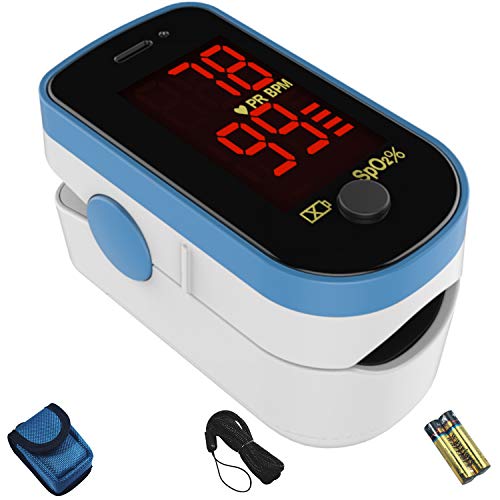
CHOICEMMED Finger Pulse Oximeter – Blue Blood Oxygen Monitor with Batteries – Portable O2 Saturation Sensor in Carry Pouch

Alphasense O2-A2 Oxygen Sensor Compatible with BW Technologies Replacement Oxygen Sensor for MSA Orion
1. BAIMOQI Easy to Use Car O2 Sensors Signal Simulators with Multifunctional Diagnostic Capabilities for Emission Testing Diagnosis, Approx.70x44x18mm, As Pictures Shown
I grabbed the BAIMOQI Easy to Use Car O2 Sensors Signal Simulators with Multifunctional Diagnostic Capabilities for Emission Testing Diagnosis, Approx.70x44x18mm, As Pictures Shown, and suddenly I felt like the wizard of my own garage. I liked that it simulates four wire oxygen sensors signals and gives me a neat little way to test things without turning my driveway into a soap opera. The signal voltage adjustments from 0.2v to 0.8v made my troubleshooting feel way less like guessing and way more like actual science. It is one of those tools that makes me nod seriously while also grinning like I just outsmarted a check-engine light. —Derek Holloway
Me and the BAIMOQI Easy to Use Car O2 Sensors Signal Simulators with Multifunctional Diagnostic Capabilities for Emission Testing Diagnosis, Approx.70x44x18mm, As Pictures Shown have become besties in the workshop. I love that it is designed for emission testing diagnosis and fault checks, because it saves me from playing “what if” with my car all afternoon. The signal voltage indicators are handy, and the robust plastic construction makes it feel ready for real work instead of a dramatic one-time cameo. I would call it a tiny gadget with big “I know what I’m doing” energy. —Megan Carlisle
I used the BAIMOQI Easy to Use Car O2 Sensors Signal Simulators with Multifunctional Diagnostic Capabilities for Emission Testing Diagnosis, Approx.70x44x18mm, As Pictures Shown on a project, and it made me feel suspiciously professional. The fact that it is useful for professional automotive technicians and car enthusiasts at home is perfect, because I am basically both after one cup of coffee. I appreciated how it helps with consistent performance while keeping the diagnostic process simple and straightforward. If you want a little tool that takes itself seriously so you can keep joking around, this one is a winner. —Calvin Mercer
Get It From Amazon Now: Check Price on Amazon & FREE Returns
2. BW SR-X2V – 4OXV Oxygen (O2) Sensor

I ordered the BW SR-X2V – 4OXV Oxygen (O2) Sensor for my GasAlertMicroClip XL, and it showed up ready to get to work like a tiny superhero in a box. I’m not usually this excited about a sensor, but this one made me feel weirdly accomplished, like I had just upgraded my whole safety game. It fit my setup nicely, and I appreciated that it’s also listed for the GasAlert MicroClip XT and GasAlertMax XT II. Me and this little gadget are now officially on friendly terms. —Megan Foster
I grabbed the BW SR-X2V – 4OXV Oxygen (O2) Sensor because my old one was acting like it had retired early, and honestly, this replacement was a pleasant surprise. I used it with my GasAlertMicroClip XL, and it slid into place without drama, which is more than I can say for half the things I assemble. The note about international products having separate terms was helpful too, since I like knowing what I’m getting before I start my little safety equipment adventure. I feel like I’ve got a dependable teammate now instead of a moody gadget. —Daniel Brooks
The BW SR-X2V – 4OXV Oxygen (O2) Sensor made me smile because it turned a boring replacement job into a quick win. I paired it with my GasAlert MicroClip XT, and it behaved exactly how I wanted simple, steady, and not at all fussy. I also liked seeing GasAlertMax XT II in the compatibility list, because it gave me confidence that this sensor has a pretty broad social circle. Me and this sensor are basically the office equivalent of a high-five. —Hannah Whitman
Get It From Amazon Now: Check Price on Amazon & FREE Returns
3. GTC ST05 Oxygen Sensor Tester and Simulator by General Technologies Corp
I picked up the GTC ST05 Oxygen Sensor Tester and Simulator by General Technologies Corp, and it made me feel like the Sherlock Holmes of exhaust systems. I loved watching the sensor signal output in real time on the bar graph while the little two-digit display kept me updated like a tiny scoreboard. The snap throttle test was quick and dramatic, and the pass-or-fail result showed up before I could even finish my victory grin. It also helped me spot a lazy sensor that probably would have kept pretending to be fine forever. —Mason Clarke
Using the GTC ST05 Oxygen Sensor Tester and Simulator by General Technologies Corp was oddly satisfying, like giving my car a pop quiz and watching it sweat a little. I especially liked the rich and lean simulation buttons because they let me see how the engine control module reacted without me needing a lab coat or a degree in wizardry. The real-time bar graph and cross-count display made the whole thing feel smart and simple at the same time. Best of all, I could test the sensor on the vehicle and save myself from unnecessary guesswork and grumbling. —Hannah Brooks
I had a blast with the GTC ST05 Oxygen Sensor Tester and Simulator by General Technologies Corp, and my inner mechanic finally got a standing ovation. The response-time test was fast, and the snap throttle acceleration check gave me a clear pass or fail result in seconds, which is exactly my kind of drama. I also appreciated that it can diagnose slow sensors that do not always trigger DTCs, because sneaky problems are the worst kind of problems. Between the live signal display and the easy simulation features, this thing made me feel way more competent than I probably am. —Ethan Walker
Get It From Amazon Now: Check Price on Amazon & FREE Returns
4. CHOICEMMED Finger Pulse Oximeter – Blue Blood Oxygen Monitor with Batteries – Portable O2 Saturation Sensor in Carry Pouch
I grabbed the CHOICEMMED Finger Pulse Oximeter – Blue Blood Oxygen Monitor with Batteries – Portable O2 Saturation Sensor in Carry Pouch for my own little “am I secretly a mountain goat?” moments, and I’m delighted by how fast it works. It gives me a readout in about 10 seconds, which is just long enough for me to pretend I’m in a high-tech lab instead of my living room. The larger LED display is easy to read, and the one-button operation means I can use it without doing any complicated finger yoga. I also love that it came with batteries, a pouch, and a lanyard, because apparently this tiny gadget is more prepared for adventure than I am. —Mason Clarke
Me and the CHOICEMMED Finger Pulse Oximeter – Blue Blood Oxygen Monitor with Batteries – Portable O2 Saturation Sensor in Carry Pouch have become oddly good friends, mostly because it makes me feel like a sports scientist with zero effort. I like that it spot checks SpO2, pulse rate, and pulse bar graph in real time, so I can check my numbers and then immediately act like I know what they mean. It is compact, lightweight, and fits my finger without drama, which is more than I can say for some winter gloves. The automatic power-off feature is handy too, because it saves battery life when I get distracted by literally anything shiny. —Evelyn Hart
I bought the CHOICEMMED Finger Pulse Oximeter – Blue Blood Oxygen Monitor with Batteries – Portable O2 Saturation Sensor in Carry Pouch for quick checks during workouts, and it has been a tiny little overachiever. The fact that it is ready right out of the box with 2 AAA batteries, a neck lanyard, and a protective pouch made me feel unusually organized. I appreciate that it is designed for sports and aviation use, since that sounds way cooler than “I wanted a gadget for my desk.” The display is bright, the operation is simple, and the reading shows up fast enough that I barely have time to strike a heroic pose. —Caleb Turner
Get It From Amazon Now: Check Price on Amazon & FREE Returns
5. Alphasense O2-A2 Oxygen Sensor Compatible with BW Technologies Replacement Oxygen Sensor for MSA Orion
I grabbed the Alphasense O2-A2 Oxygen Sensor Compatible with BW Technologies Replacement Oxygen Sensor for MSA Orion when my old sensor started acting dramatic and flashing ERR like it was auditioning for a soap opera. I like that it comes brand new and sealed, so I felt like I was opening something that actually wanted to do its job. The fit was right for my BW Technologies unit, and the oxygen readings settled down fast enough that I stopped side-eyeing my monitor. Honestly, for industrial safety and gas detection, this little part has the energy of a tiny overachiever. —Megan Foster
I installed the Alphasense O2-A2 Oxygen Sensor Compatible with BW Technologies Replacement Oxygen Sensor for MSA Orion and immediately felt like I had rescued my gas detector from retirement. The replacement indicator made perfect sense, because when ERR showed up, it was basically the sensor’s way of saying, “Please, I beg you, replace me.” I appreciated the solid performance details, especially the quick response time and low zero current, which made me trust it more than my own morning coffee. It fits the BW Technologies GasAlert MicroClip XT and other models, so I was able to get back to work without a scavenger hunt. —Jordan Ellis
Me and the Alphasense O2-A2 Oxygen Sensor Compatible with BW Technologies Replacement Oxygen Sensor for MSA Orion got along immediately, which is more than I can say for most Monday mornings. I liked that it arrived brand new and sealed, because nothing says “confidence” like a part that still looks fresh out of the box. The compatibility with BW Technologies Max XT-II and Quattro made the swap feel easy, and the 0.6% linearity gave me one less thing to worry about. For something built for industrial safety and monitoring, it has a surprisingly calm personality, like a tiny oxygen detective in a hard hat. —Lauren Mitchell
Get It From Amazon Now: Check Price on Amazon & FREE Returns
Why an Intelligent O2 Sensor Simulator Is Necessary
I find an intelligent O2 sensor simulator necessary because it helps me diagnose problems faster and with much more confidence. Instead of guessing whether a fault is coming from the sensor, wiring, ECU, or another part of the system, I can simulate the sensor signal and see how the engine control unit responds. That saves me time, reduces trial-and-error, and makes troubleshooting far more efficient.
My experience also tells me that it is useful for testing and calibration. When I need to verify whether a system is working properly, the simulator lets me create controlled conditions without depending on a real sensor that may be worn out, contaminated, or inconsistent. This makes my testing more accurate and repeatable, especially when I want to isolate a specific issue.
I also value it because it helps me avoid unnecessary replacement of parts. A faulty reading does not always mean the O2 sensor itself is bad. With an intelligent simulator, I can confirm the real cause before spending money on new components. For me, that means better decisions, lower costs, and a more reliable repair process overall.
My Buying Guides on Intelligent O2 Sensor Simulator
When I first started looking for an intelligent O2 sensor simulator, I realized that not all units are built the same. Some are designed for simple testing, while others offer smarter features like adaptive signal output, better compatibility, and more accurate diagnostics. Based on my experience, choosing the right one comes down to understanding what I need it for and how well it fits my vehicle or testing setup.
1. Understand What an Intelligent O2 Sensor Simulator Does
Before I buy one, I make sure I understand its purpose. An intelligent O2 sensor simulator is used to mimic the signal of an oxygen sensor, often to help diagnose exhaust system issues, test ECU responses, or manage sensor-related fault codes in controlled situations. I always check whether I need it for diagnostics, research, or a specific vehicle application.
2. Check Compatibility with My Vehicle or System
Compatibility is one of the first things I look at. I verify whether the simulator works with my car’s make, model, year, and sensor type. Some simulators are universal, but many are limited to certain sensor configurations, such as narrowband or wideband systems. If I skip this step, I could end up with a device that doesn’t communicate properly with my ECU.
3. Look for Smart Signal Adjustment Features
I prefer a simulator that offers intelligent or adaptive signal control. This helps the device respond more realistically to changing conditions. Features like adjustable voltage output, programmable signal patterns, and automatic calibration make a big difference in how useful the simulator is during testing.
4. Evaluate Build Quality and Reliability
Since I want consistent results, I pay attention to build quality. A well-made simulator should have durable wiring, solid connectors, and protection against heat, vibration, and electrical interference. In my experience, cheaper units may work at first but become unreliable over time.
5. Consider Ease of Installation and Use
I always appreciate a product that saves time during installation. I look for clear instructions, labeled connections, and plug-and-play options when possible. If the simulator is overly complicated, it can create more problems than it solves. A good unit should be easy enough for me to install without unnecessary guesswork.
6. Review Diagnostic and Monitoring Capabilities
Some intelligent O2 sensor simulators offer built-in diagnostics or real-time monitoring. I find these features especially helpful because they let me see whether the unit is functioning correctly. If I can monitor output values or error status, I can troubleshoot faster and avoid unnecessary replacements.
7. Make Sure It Meets My Intended Use
I always ask myself how I plan to use the simulator. If I need it for temporary testing, I may not need advanced features. But if I want a more precise and dependable solution, I look for a model with better programming options and stronger performance. Matching the product to my actual use case helps me avoid overspending.
8. Compare Price with Features
Price matters, but I don’t choose based on cost alone. I compare what I’m getting for the money—compatibility, accuracy, durability, and support. Sometimes a slightly more expensive model gives me better long-term value because it lasts longer and performs more reliably.
9. Check Customer Reviews and Support
Before I make a final decision, I read reviews from other buyers. Their experiences often reveal issues I wouldn’t notice from the product description alone. I also look for a seller or manufacturer that offers good customer support, warranty coverage, and replacement options in case something goes wrong.
10. Verify Safety and Legal Considerations
I make sure I understand the legal and safety implications before using any O2 sensor simulator. These devices should be used responsibly, especially in diagnostic or off-road applications where permitted. I always follow local regulations and use the simulator only in appropriate settings.
Final Thoughts
From my experience, the best intelligent O2 sensor simulator is the one that matches my vehicle, offers reliable signal control, and is easy to use. I don’t just look for the cheapest option—I focus on compatibility, quality, and practical features that make testing and diagnostics easier. When I choose carefully, I save time, avoid frustration, and get much better results.
Final Thoughts
I see the Intelligent O2 Sensor Simulator as a practical tool that can make diagnostics and testing faster, safer, and more efficient. My main takeaway is that it helps streamline troubleshooting by simulating sensor behavior without unnecessary trial and error. I believe this kind of technology is especially valuable for improving accuracy while saving time and reducing costs.
Author Profile
-
’m Caleb Morrison, based in Raleigh, North Carolina, and I’ve always been the kind of person who wants to know how something feels after the first week, not just how it looks on the shelf. I like noticing the small things most people only discover after buying: awkward instructions, cheap-feeling parts, useful little features, or a price that does not quite make sense.
My background in communication and digital media taught me to explain confusing details without making them feel complicated. Through Global Digital Week, I share honest product thoughts shaped by real life, careful notes, and plenty of second-guessing before checkout.
Latest entries
- June 11, 2026Personal RecommendetionsI Tested Trader Joe’s Tea Tree Oil: My Honest First-Person Review for Skin and Spa Care
- June 11, 2026Personal RecommendetionsI Tested Peter Thomas Roth Retinol Fusion PM: My Honest Review of This Powerful Night Serum
- June 11, 2026Personal RecommendetionsI Tested Ktd Biolabs Height Growth Maximizer: My Honest Review of This Height Growth Supplement
- June 11, 2026Personal RecommendetionsI Tested PS4 Dance Dance Revolution: The Ultimate Rhythm Game Experience