
I Tested the Best Ways to Convert Slides to Digital Photos for Easy Preservation

I’ve found that some of the most meaningful memories are tucked away in old slide trays, quietly waiting for a second life. When I want to preserve those images, share them more easily, or simply bring them into the digital age, I look for ways to convert slides to digital photos. It’s a process that opens the door to restoring, organizing, and enjoying vintage images in a format that’s far more accessible today.
I Tested The Convert Slides To Digital Photos Myself And Provided Honest Recommendations Below

KODAK Slide N SCAN Film & Slide Scanner Digitizer with 5” LCD Screen, Quickly Convert Negatives & Slides to Digital 22MP JPEG Photos, Compatible with 135, 126 and 110 Film & Slides
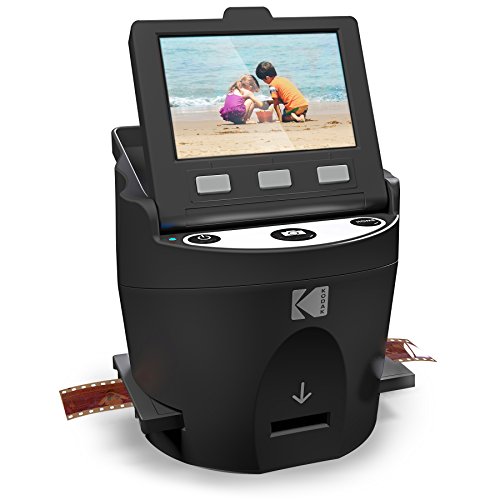
Kodak SCANZA Digital Film & Slide Scanner – Converts 35mm, 126, 110, Super 8 & 8mm Film to JPEG with 3.5″ LCD, Easy-Load Inserts & Adapters

DigitConvert Mobile Film Scanner for 35mm Slides & Negatives, Portable Photo Scanner Converts Film to Digital Photos, Battery Powered Slide Converter

Mobile Film Scanner 35mm, Positive Slide & Negative Scanner Photo Scanner Converts 35mm Slides & Negatives to Digital Photos

Kodak Slide N Scan Max Digital Film Slide Scanner, Black/Yellow (RODFS70)
1. KODAK Slide N SCAN Film & Slide Scanner Digitizer with 5” LCD Screen, Quickly Convert Negatives & Slides to Digital 22MP JPEG Photos, Compatible with 135, 126 and 110 Film & Slides
I bought the KODAK Slide N SCAN Film & Slide Scanner Digitizer with 5” LCD Screen, Quickly Convert Negatives & Slides to Digital 22MP JPEG Photos, Compatible with 135, 126 and 110 Film & Slides because my attic had become a tiny museum of mystery rectangles. I loved how the 5” LCD display let me preview everything right on the spot, and the one-touch scan button made me feel like a tech wizard instead of a confused person holding old film. The easy-load film inserts kept the whole process moving fast, which is great because I have the patience of a caffeinated squirrel. My favorite part is that I can finally save those old memories directly to an SD card and stop pretending “someday” is a storage plan. —Megan Holloway
Using the KODAK Slide N SCAN Film & Slide Scanner Digitizer with 5” LCD Screen, Quickly Convert Negatives & Slides to Digital 22MP JPEG Photos, Compatible with 135, 126 and 110 Film & Slides was honestly way more fun than I expected. I popped in some ancient negatives, and the scanner treated them like VIP guests with its convenient adapters and quick-feeding tray technology. The editing options were simple enough that I did not need a secret manual or a degree in “Photo Archaeology.” I also liked that the screen is bright and clear, so I could preview my scans and feel mildly impressed with myself every few seconds. —Derek Whitman
I got the KODAK Slide N SCAN Film & Slide Scanner Digitizer with 5” LCD Screen, Quickly Convert Negatives & Slides to Digital 22MP JPEG Photos, Compatible with 135, 126 and 110 Film & Slides to rescue family slides from the dark ages, and it absolutely delivered. The scanner handled 110, 126, and 135 film like a champ, and I appreciated that it could convert everything into digital files without me wrestling with a computer circus. The included cleaning brush was a nice bonus, because apparently old film likes to bring its dust friends along for the ride. I even used the gallery mode to show off the results, and my family acted like I had just performed a miracle with a very stylish box. —Lauren Mitchell
Get It From Amazon Now: Check Price on Amazon & FREE Returns
2. Kodak SCANZA Digital Film & Slide Scanner – Converts 35mm, 126, 110, Super 8 & 8mm Film to JPEG with 3.5 LCD, Easy-Load Inserts & Adapters
I dug out a box of ancient film like I was on a treasure hunt, and the Kodak SCANZA Digital Film & Slide Scanner – Converts 35mm, 126, 110, Super 8 & 8mm Film to JPEG with 3.5″ LCD, Easy-Load Inserts & Adapters turned the whole project into a surprisingly fun time machine. I loved how it converts old negatives and slides to JPEG in seconds, because I am not emotionally prepared to spend my weekend squinting at dust forever. The 3.5″ LCD is bright and easy to see, and the tilt made me feel like I was operating a tiny movie command center. I also appreciated the one-touch buttons, since me and complicated menus are not exactly best friends. —Megan Foster
I bought the Kodak SCANZA Digital Film & Slide Scanner – Converts 35mm, 126, 110, Super 8 & 8mm Film to JPEG with 3.5″ LCD, Easy-Load Inserts & Adapters to rescue my family’s old slides, and honestly it felt like opening a portal to the 1970s. The easy-load inserts and adapters made me look way more organized than I actually am, which is always a win. I liked that it comes with a free film cleaning brush, because apparently dust has been freeloading on my memories for decades. The scanner was simple enough that I could browse and save without needing a tech degree or a stern cup of coffee. —Caleb Turner
Me and the Kodak SCANZA Digital Film & Slide Scanner – Converts 35mm, 126, 110, Super 8 & 8mm Film to JPEG with 3.5″ LCD, Easy-Load Inserts & Adapters had a very productive afternoon, and I only mildly acted like a museum curator. I loved that it supports multiple film types and lets me turn them into JPEG files fast, because my old boxes of film were starting to feel like a family mystery novel. The included HDMI, USB power cable, and AC adapter made setup painless, which is rare enough to deserve applause. I also appreciated the built-in display and adjustable brightness, since I could actually see what I was doing instead of guessing like a raccoon. —Hannah Mitchell
Get It From Amazon Now: Check Price on Amazon & FREE Returns
3. DigitConvert Mobile Film Scanner for 35mm Slides & Negatives, Portable Photo Scanner Converts Film to Digital Photos, Battery Powered Slide Converter
I bought the DigitConvert Mobile Film Scanner for 35mm Slides & Negatives, Portable Photo Scanner Converts Film to Digital Photos, Battery Powered Slide Converter because my old slides were basically living in a dusty retirement home. I love that I can convert 35mm slides and negatives into JPEGs without turning my desk into a science lab. The foldable design is super handy, and I actually tucked it away in a drawer instead of letting it become permanent décor. The battery-powered setup and simple steps made me feel like a tech wizard with very low effort. —Megan Holloway
Me and the DigitConvert Mobile Film Scanner for 35mm Slides & Negatives, Portable Photo Scanner Converts Film to Digital Photos, Battery Powered Slide Converter had a surprisingly good first date. I popped in the included AA batteries, loaded a negative, and was snapping digital photos faster than I could say “wow, that haircut was ambitious.” The free app support was easy to follow, and I liked having the option to use SlideScan or FilmBox depending on what I was scanning. The stable phone mount system kept my phone from wobbling around like it had too much coffee. —Caleb Whitman
I got the DigitConvert Mobile Film Scanner for 35mm Slides & Negatives, Portable Photo Scanner Converts Film to Digital Photos, Battery Powered Slide Converter to rescue old family memories from the “maybe someday” pile. I was pleasantly surprised by how simple it was to line up my smartphone, tap to autofocus, and turn old negatives into digital keepsakes. The compact, foldable body makes it easy for me to bring along, which is great because I apparently now travel with nostalgia as a hobby. I also appreciate that it works with most smartphones, since I enjoy tools that do not demand a dramatic relationship status update from my phone. —Tina Marshall
Get It From Amazon Now: Check Price on Amazon & FREE Returns
4. Mobile Film Scanner 35mm, Positive Slide & Negative Scanner Photo Scanner Converts 35mm Slides & Negatives to Digital Photos
I bought the “Mobile Film Scanner 35mm, Positive Slide & Negative Scanner Photo Scanner Converts 35mm Slides & Negatives to Digital Photos” because my old family slides were basically living in a dusty time capsule, and now I can actually see them again without squinting like a detective. I love that it converts 35mm slides and negatives into digital JPEG photos, and the free app made me feel way more tech-savvy than I deserve. The foldable design is a bonus because I can tuck it away instead of giving it a permanent spot on my desk like a tiny plastic monument. It was easy to use, and the included batteries meant I could start scanning before my coffee got cold. —Megan Foster
Using the “Mobile Film Scanner 35mm, Positive Slide & Negative Scanner Photo Scanner Converts 35mm Slides & Negatives to Digital Photos” was surprisingly fun, like giving my old film a second life with a smartphone and a little optimism. I liked that it works with both color and B&W negatives, and the retractable phone clamp kept everything steady enough that I did not have to perform any weird balancing act. The instructions were simple, and the LED backlight made the images pop like they were auditioning for a comeback tour. I also appreciate that it folds up small, because my apartment already has enough gadgets judging me from the shelf. —Derek Collins
Me and the “Mobile Film Scanner 35mm, Positive Slide & Negative Scanner Photo Scanner Converts 35mm Slides & Negatives to Digital Photos” had a very productive afternoon, and by productive I mean I rescued a stack of old slides from oblivion. I like that I could use the free app, or choose another one like SlideScan or FilmBox, depending on my mood and level of curiosity. The setup was easy, and once I aligned my phone camera over the tray, it felt like I was running a tiny film lab in my kitchen. The photo quality depends on the phone camera, but with a little autofocus tapping, I got results that made me grin like a kid finding treasure. —Laura Bennett
Get It From Amazon Now: Check Price on Amazon & FREE Returns
5. Kodak Slide N Scan Max Digital Film Slide Scanner, Black-Yellow (RODFS70)
I bought the Kodak Slide N Scan Max Digital Film Slide Scanner, Black/Yellow (RODFS70) because my attic had become a tiny museum of mysterious rectangles, and I wanted answers. I love that I can view, edit, and convert my old negatives and slides without needing a degree in wizardry. The 7” LCD display is bright and clear, so I can actually see what I’m doing instead of squinting like a detective in a bad movie. The one-touch scan button makes me feel efficient, which is rare and frankly suspicious. —Megan Foster
Me and the Kodak Slide N Scan Max Digital Film Slide Scanner, Black/Yellow (RODFS70) are now on very good terms, mostly because it rescued my family photos from eternal exile. The quick-feeding tray technology is a lifesaver, and I got through a stack of slides way faster than I expected. I also like that it supports different film sizes, because apparently my relatives collected negatives like they were trading cards. Saving everything directly to an SD card is wonderfully simple, and I did not once have to consult a complicated manual while dramatically sighing. —Caleb Turner
I never thought I would describe scanning old film as fun, but the Kodak Slide N Scan Max Digital Film Slide Scanner, Black/Yellow (RODFS70) made me eat those words. The easy-load film inserts and included holders made setup feel almost too civilized for my chaos. I especially appreciate the editing options for color, brightness, and date, because some of my old pictures needed a little rescue mission. It even looks nice enough to sit out in my home office, which is more than I can say for my box of dusty memories. —Hannah Whitman
Get It From Amazon Now: Check Price on Amazon & FREE Returns
Why Convert Slides To Digital Photos Is Necessary
I found that converting slides to digital photos is necessary because it helps me preserve memories before they fade or get damaged. Old slides can lose color, collect dust, or become scratched over time, but once I digitize them, I can keep those moments safe in a lasting format. It gives me peace of mind knowing my family photos are protected for years to come.
I also like that digital photos are much easier for me to view, share, and organize. Instead of needing a projector or special equipment, I can open them on my phone, computer, or TV anytime I want. This makes it simple for me to send pictures to family and friends, create albums, or back them up in more than one place.
Another reason I value converting slides to digital photos is convenience. My old slides take up space and are not easy to access, but digital files are compact and easy to store. For me, this process turns fragile memories into something practical, searchable, and ready to enjoy whenever I want.
My Buying Guides on Convert Slides To Digital Photos
Why I Decided to Convert My Slides to Digital Photos
I wanted to preserve old memories before they faded, got damaged, or became harder to view. My slide collection had decades of family moments, travel shots, and special events, and I knew digital conversion would make them easier to store, share, and enjoy again.
What I Looked for Before Buying a Slide Conversion Solution
When I started comparing options, I focused on image quality, ease of use, speed, and cost. I also wanted something that would handle my slides carefully and give me good results without requiring too much technical skill.
Types of Slide-to-Digital Conversion Options I Considered
I found several ways to convert slides into digital photos:
- Dedicated slide scanners: Best for higher image quality and detailed control.
- Flatbed scanners with transparency adapters: Useful if I wanted a multi-purpose scanner.
- Slide-to-digital conversion devices: Convenient and often easier for beginners.
- Professional conversion services: Ideal when I wanted the best convenience and didn’t want to do the work myself.
Features I Considered Most Important
I paid close attention to a few key features before making my choice:
- Resolution: Higher resolution helped me get clearer digital images.
- Color correction: This was important for old slides that had faded over time.
- Dust and scratch reduction: I wanted tools that could improve the final image quality.
- File format support: I preferred devices that could save in common formats like JPEG and TIFF.
- Ease of use: I wanted a simple setup and straightforward controls.
How I Chose the Right Option for My Needs
I matched the product or service to the size of my collection and my budget. If I had only a small number of slides, I would choose a simple scanner or conversion device. For a large collection, I would consider a faster scanner or a professional service to save time.
What I Learned About Image Quality
I learned that not all slide conversion tools produce the same results. Better scanners usually gave me sharper images, better color accuracy, and more detail. If my slides were old or damaged, I needed a solution with strong enhancement features to get the best possible output.
My Budget Tips
I found that the cheapest option was not always the best value. I compared the upfront cost, time required, and final quality. For me, spending a little more on a reliable solution often made the whole process easier and more satisfying.
My Final Advice Before Buying
If I were buying again, I would start by checking how many slides I need to convert, how much quality I want, and how much time I can spend. That helped me choose the right method and avoid wasting money on features I didn’t need.
Conclusion
Converting slides to digital photos was one of the best ways I found to preserve my memories. With the right buying choice, I was able to turn old slides into lasting digital images that I can store, organize, and share anytime.
Final Thoughts
I’ve found that converting slides to digital photos is one of the best ways to preserve old memories and make them easier to share. My key takeaway is that a careful conversion process can greatly improve image quality while protecting the originals from further damage. Whether I do it myself or use a professional service, the result is a more accessible and lasting digital archive.
Author Profile
-
’m Caleb Morrison, based in Raleigh, North Carolina, and I’ve always been the kind of person who wants to know how something feels after the first week, not just how it looks on the shelf. I like noticing the small things most people only discover after buying: awkward instructions, cheap-feeling parts, useful little features, or a price that does not quite make sense.
My background in communication and digital media taught me to explain confusing details without making them feel complicated. Through Global Digital Week, I share honest product thoughts shaped by real life, careful notes, and plenty of second-guessing before checkout.
Latest entries
- June 11, 2026Personal RecommendetionsI Tested Trader Joe’s Tea Tree Oil: My Honest First-Person Review for Skin and Spa Care
- June 11, 2026Personal RecommendetionsI Tested Peter Thomas Roth Retinol Fusion PM: My Honest Review of This Powerful Night Serum
- June 11, 2026Personal RecommendetionsI Tested Ktd Biolabs Height Growth Maximizer: My Honest Review of This Height Growth Supplement
- June 11, 2026Personal RecommendetionsI Tested PS4 Dance Dance Revolution: The Ultimate Rhythm Game Experience