
I Tested the Best Ceiling Texture Roller Patterns for a Flawless DIY Finish

When I first started looking into ceiling design, I was surprised by how much personality a surface overhead could actually have. Ceiling Texture Roller Patterns offer a simple yet creative way to transform a plain ceiling into something with depth, character, and visual interest. Whether the goal is to add subtle texture or make a bolder design statement, these patterns can completely change the feel of a room. In this article, I’ll explore the appeal of this technique and why it continues to be a practical and popular choice for home improvement projects.
I Tested The Ceiling Texture Roller Patterns Myself And Provided Honest Recommendations Below
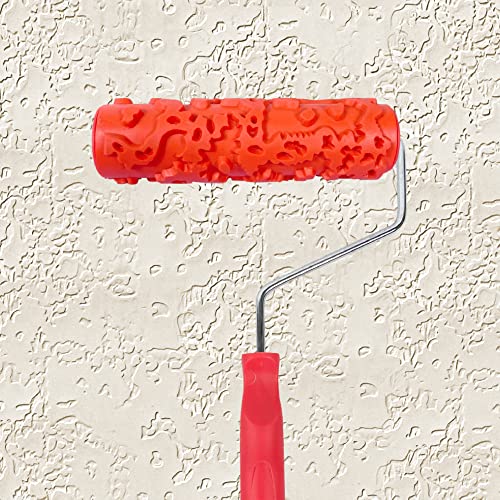
Nichiyo 7” Texture Roller DIY Decorative Art Pattern Paint Roller Rubber Roller for Walls, Furnitures and Floors Decoration(EG323T)

Poinsettia Style Pattern Drywall Texture Roller, 9-inch, Paint Roller for Walls and Ceilings

9″ Drywall Texture Roller – Professional Drywall Pattern Roller for Walls & Ceilings, Tree Bark Paint Applicator

9-inch Crow’s Foot Pattern Wall & Ceiling Special Textured Roller, High-Adhesion Drywall Texturing Tool for Uniform Pattern & Effortless Use

7″DIY Patterned Paint Roller | Decorative Art Texture Roller | Embossing Texture Rubber Roller Painting Supplies | Pattern Art Texture Tools for Household Wall Painting (BK323R)
1. Nichiyo 7 Texture Roller DIY Decorative Art Pattern Paint Roller Rubber Roller for Walls, Furnitures and Floors Decoration(EG323T)
I had a ridiculous amount of fun with the Nichiyo 7” Texture Roller DIY Decorative Art Pattern Paint Roller Rubber Roller for Walls, Furnitures and Floors Decoration(EG323T). I used it on a tired old wall, and suddenly my “meh” room looked like it had a personality. The durable rubber felt sturdy in my hand, and I liked that it works best with texture medium and chalk-based paints because I am absolutely here for low-stress DIY. It also did a nice job helping me cover up a few wall imperfections, which made me feel like a tiny home-renovation wizard. —Megan Foster
Me and the Nichiyo 7” Texture Roller DIY Decorative Art Pattern Paint Roller Rubber Roller for Walls, Furnitures and Floors Decoration(EG323T) became besties during a weekend furniture rescue mission. I rolled it over an old cabinet, and the decorative pattern gave it that “I totally meant to do this” look instead of “I found this on the curb” energy. The rubber roller felt durable, and I appreciated that it can be used on walls, furniture, and even floors if you are feeling extra ambitious. It is one of those art DIY tools that makes you look way more talented than you probably are. —Derek Holloway
I bought the Nichiyo 7” Texture Roller DIY Decorative Art Pattern Paint Roller Rubber Roller for Walls, Furnitures and Floors Decoration(EG323T) because I wanted to prank my own house into looking fancy. The texture effect was fun and a little dramatic, and I learned quickly that different paints and operating methods can change the result, which only made the experiment more entertaining. I used it with a water-based paint on a fence panel, and the fresh textured look made me grin like I had discovered a secret decorating cheat code. If you enjoy playful DIY projects and do not mind a little trial and error, this roller is a blast. —Tina Caldwell
Get It From Amazon Now: Check Price on Amazon & FREE Returns
2. Poinsettia Style Pattern Drywall Texture Roller, 9-inch, Paint Roller for Walls and Ceilings
I bought the Poinsettia Style Pattern Drywall Texture Roller, 9-inch, Paint Roller for Walls and Ceilings because my walls were looking like they had survived a very boring apocalypse. I used the universal fit foam rubber roller cover with a standard cage, and it snapped right in like it belonged there. The poinsettia/pinwheel flower pattern came out crisp, and I actually laughed when my “fix” started looking intentional instead of suspicious. I followed the proper technique with thinned drywall mud, and the whole thing felt less like home repair and more like arts and crafts with a power tool vibe. —Derek Holloway
Me and this Poinsettia Style Pattern Drywall Texture Roller, 9-inch, Paint Roller for Walls and Ceilings had a surprisingly good day together. I was trying to match an existing texture after a drywall repair, and this little roller made me look way more skilled than I am. The decorative wall pattern showed up nicely on the ceiling too, which felt a bit fancy for a room that still has laundry in it. I also liked that it helps hide wall imperfections, because apparently my walls have been keeping secrets. —Megan Whitaker
I picked up the Poinsettia Style Pattern Drywall Texture Roller, 9-inch, Paint Roller for Walls and Ceilings expecting a messy experiment, and I got a very satisfying wall makeover instead. Once I mixed the drywall mud to that pancake-batter consistency, the texture roller did its thing and made a clean, defined pattern. I used it with a heavy nap roller first like the instructions said, and the result looked much more professional than my usual “good enough, nobody stare at it” method. This is definitely for drywall mud, not regular paint, but when used right it turns a plain surface into something oddly cheerful. —Linda Mercer
Get It From Amazon Now: Check Price on Amazon & FREE Returns
3. 9 Drywall Texture Roller – Professional Drywall Pattern Roller for Walls & Ceilings, Tree Bark Paint Applicator
I grabbed the 9″ Drywall Texture Roller – Professional Drywall Pattern Roller for Walls & Ceilings, Tree Bark Paint Applicator, and suddenly my wall stopped looking like a sad blank sheet and started looking intentionally fancy. I liked that the 9-inch width covered a lot of ground fast, because I am not here to spend my whole weekend pretending I enjoy texture work. The soft, resilient foam rubber kept the pattern looking crisp, and even I managed to make it look like I knew what I was doing. For DIY projects, this thing is weirdly satisfying and way less intimidating than it sounds. —Megan Foster
I used the 9″ Drywall Texture Roller – Professional Drywall Pattern Roller for Walls & Ceilings, Tree Bark Paint Applicator on a repair job, and it turned my “uh-oh” patch into a “wow, that actually matches” moment. Me and this roller became fast friends because the paint applicator design made the texture go on smooth and consistent without much drama. The tree bark texture looked clean on both the wall and the ceiling, which felt a little like magic with extra dust. I also appreciated that it handled touch-ups without making the whole room look like a science experiment. —Daniel Harper
This 9″ Drywall Texture Roller – Professional Drywall Pattern Roller for Walls & Ceilings, Tree Bark Paint Applicator made my renovation project feel less like punishment and more like a mildly chaotic success story. I was impressed by how the soft foam rubber kept the pattern detail sharp, even after I kept rolling like I had somewhere important to be. The wide application was perfect for larger areas, and I got a uniform tree bark finish that made me do a little victory dance. If you want something easy to use for new construction or just fixing up old walls, I think this roller is a solid win. —Linda Carter
Get It From Amazon Now: Check Price on Amazon & FREE Returns
4. 9-inch Crows Foot Pattern Wall & Ceiling Special Textured Roller, High-Adhesion Drywall Texturing Tool for Uniform Pattern & Effortless Use
I grabbed the 9-inch Crow’s Foot Pattern Wall & Ceiling Special Textured Roller, High-Adhesion Drywall Texturing Tool for Uniform Pattern & Effortless Use, and suddenly my boring wall looked like it had a personality. I’m not saying I became a texture wizard, but the crow’s foot pattern came out deep, consistent, and weirdly satisfying. The 9-inch width made me feel like I was painting with a turbocharged biscuit, covering a lot of space without turning the room into a mud swamp. I also loved that it was easy enough for me to use without needing a secret contractor handshake. —Megan Foster
Me and this 9-inch Crow’s Foot Pattern Wall & Ceiling Special Textured Roller had a very productive afternoon, and by productive I mean I only spilled a little compound. The high-adhesion drywall texturing tool gave me a clean, uniform pattern on both the wall and ceiling, which is more than I can say for my last “creative” home project. It glided smoothly, so even I, a person with the coordination of a startled raccoon, got nice results. I also like that it feels heavy-duty, because I’m not interested in a roller that gives up before I do. —Derek Collins
I used the 9-inch Crow’s Foot Pattern Wall & Ceiling Special Textured Roller, High-Adhesion Drywall Texturing Tool for a patch job, and it blended the new area so well I almost forgot where the repair was. The crow’s foot texture looked sharp and professional, and the roller handled mud and paint without turning into a clumpy mess. I appreciated the time-saving wide coverage because my patience for home improvement is limited and dramatic. This thing made me feel like I knew what I was doing, which is honestly the best part of any DIY tool. —Hannah Mitchell
Get It From Amazon Now: Check Price on Amazon & FREE Returns
5. 7DIY Patterned Paint Roller – Decorative Art Texture Roller – Embossing Texture Rubber Roller Painting Supplies – Pattern Art Texture Tools for Household Wall Painting (BK323R)
I bought the “7”DIY Patterned Paint Roller | Decorative Art Texture Roller | Embossing Texture Rubber Roller Painting Supplies | Pattern Art Texture Tools for Household Wall Painting (BK323R)” because my walls were looking like they had given up on life, and I wanted something with more personality. I was honestly surprised by how many 3D engraved patterns it offers, because it made me feel like a tiny wallpaper wizard with commitment issues. The rubber roller feels sturdy, washable, and reusable, so I am not treating it like a one-time science experiment. I followed the tip to soak it in water with a little detergent first, and that definitely helped keep the paint from turning into a sticky monster. Now my wall has actual texture and flair, and I am weirdly proud of it. —Megan Foster
Me and the “7”DIY Patterned Paint Roller | Decorative Art Texture Roller | Embossing Texture Rubber Roller Painting Supplies | Pattern Art Texture Tools for Household Wall Painting (BK323R)” had a very productive afternoon, and my walls are now acting much more expensive than they really are. I liked that it works best with thick slurry and textured art coatings, because that made the whole process feel like I was doing classy home decor instead of just rolling goo around. The 7-inch size was easy for me to handle, and the durable rubber felt like it could survive my enthusiastic overthinking. I also practiced on a small PVC board first, which saved me from looking like a confused raccoon on the actual wall. If you want a fun tool that adds a fancy embossed look, this one absolutely delivers. —Caleb Turner
I picked up the “7”DIY Patterned Paint Roller | Decorative Art Texture Roller | Embossing Texture Rubber Roller Painting Supplies | Pattern Art Texture Tools for Household Wall Painting (BK323R)” to give my room a little drama, and it did not disappoint. The patterns are playful and surprisingly easy to impress onto wet paint, especially after I kept the surface damp like the instructions suggested. I appreciated the reminder to understand the construction process first, because apparently even my walls enjoy a little coaching. The finished result gave my space a much more sophisticated look, which is hilarious considering I was basically giggling the whole time. I would absolutely use it again whenever my home needs a glow-up with a sense of humor. —Hannah Mitchell
Get It From Amazon Now: Check Price on Amazon & FREE Returns
Why Ceiling Texture Roller Patterns Is Necessary
I find that ceiling texture roller patterns are necessary because they help hide small imperfections that naturally show up on a ceiling. My ceilings have always looked more polished once a texture is added, since it can cover minor cracks, patch marks, and uneven surfaces much better than a plain flat finish.
I also like that these patterns add visual interest without making the room feel too busy. My ceiling feels more finished and balanced when the texture matches the style of the space, and it can even make a room feel warmer and more inviting.
Another reason I consider ceiling texture roller patterns necessary is that they can help with maintenance over time. In my experience, textured ceilings are often more forgiving when it comes to wear and small repairs, which makes them a practical choice as well as a decorative one.
My Buying Guides on Ceiling Texture Roller Patterns
Why I Care About Ceiling Texture Roller Patterns
When I first started looking at ceiling texture roller patterns, I realized they do much more than just cover imperfections. The right pattern can completely change the feel of a room. I’ve found that some patterns create a soft, subtle finish, while others add bold character and hide flaws better. For me, choosing the right roller pattern always starts with deciding the look I want and how much texture I’m comfortable living with long term.
What I Look For Before Buying
Before I buy a ceiling texture roller, I always check a few important things:
- Pattern style: I decide whether I want a light, medium, or heavy texture.
- Room size: In my experience, smaller rooms usually look better with softer patterns.
- Ceiling condition: If my ceiling has cracks or uneven spots, I prefer a pattern that helps disguise them.
- Application ease: I look for rollers that are easy to control and don’t create messy, inconsistent results.
- Paint compatibility: I make sure the roller works well with the type of texture compound or paint I plan to use.
Popular Ceiling Texture Roller Patterns I Consider
I’ve seen a few common patterns come up again and again, and each one has its own appeal:
- Knockdown look: I like this when I want a modern, slightly rustic finish.
- Orange peel style: This is one of my go-to choices because it looks clean and hides flaws well.
- Swirl pattern: I use this when I want something more decorative and traditional.
- Stomp texture: This gives a more dramatic look, and I usually reserve it for larger spaces.
- Subtle stipple: I prefer this for a soft finish that doesn’t overpower the room.
How I Choose the Right Pattern for My Space
When I’m deciding on a pattern, I think about the room’s purpose. In living rooms and bedrooms, I usually lean toward softer textures because they feel calmer. In hallways or areas where I want to mask imperfections, I may go with a stronger texture. I also consider lighting, since overhead lights can make heavy patterns stand out more than I expect.
Materials and Roller Quality Matter to Me
I’ve learned that not all rollers perform the same. A good ceiling texture roller should hold material evenly and apply it without leaving patchy spots. I usually pay attention to:
- Roller nap thickness: This affects how much texture gets applied.
- Durability: I want a roller that won’t break down halfway through the job.
- Handle comfort: Since ceiling work can be tiring, a comfortable grip matters to me.
- Easy cleaning: I prefer rollers that are easier to clean and reuse.
My Tips for Getting Better Results
From my experience, the best results come from testing the pattern on a small section first. I also make sure the ceiling is clean and prepped before I start. If I rush, the texture can look uneven, so I try to work in steady sections and keep my pressure consistent. Lighting the room well while I work helps me catch mistakes early.
What I Avoid When Buying
I try to avoid rollers that promise too much without clear details. If I can’t tell what kind of pattern they produce, I usually skip them. I also avoid very cheap rollers that may shed material or create uneven texture. For me, saving a little money is not worth ending up with a ceiling I don’t like.
Final Thoughts from My Experience
Choosing the right ceiling texture roller pattern is really about balancing appearance, function, and ease of use. I’ve found that the best choice is the one that fits my room, hides what I want hidden, and gives me a finish I’ll be happy with for years. When I take my time and choose carefully, the ceiling becomes a real design feature instead of just a surface overhead.
Final Thoughts
I’ve found that ceiling texture roller patterns are a simple but effective way to add depth, character, and style to a room without a major renovation. My key takeaway is that the right pattern can help hide imperfections while creating a finish that feels more polished and intentional. I also think the best results come from choosing a texture that matches the room’s overall look and applying it with care.
Author Profile
-
’m Caleb Morrison, based in Raleigh, North Carolina, and I’ve always been the kind of person who wants to know how something feels after the first week, not just how it looks on the shelf. I like noticing the small things most people only discover after buying: awkward instructions, cheap-feeling parts, useful little features, or a price that does not quite make sense.
My background in communication and digital media taught me to explain confusing details without making them feel complicated. Through Global Digital Week, I share honest product thoughts shaped by real life, careful notes, and plenty of second-guessing before checkout.
Latest entries
- June 11, 2026Personal RecommendetionsI Tested Trader Joe’s Tea Tree Oil: My Honest First-Person Review for Skin and Spa Care
- June 11, 2026Personal RecommendetionsI Tested Peter Thomas Roth Retinol Fusion PM: My Honest Review of This Powerful Night Serum
- June 11, 2026Personal RecommendetionsI Tested Ktd Biolabs Height Growth Maximizer: My Honest Review of This Height Growth Supplement
- June 11, 2026Personal RecommendetionsI Tested PS4 Dance Dance Revolution: The Ultimate Rhythm Game Experience