
I Tested the Best Audio Interface with XLR: My Top Pick for Clean, Professional Sound

When I first started looking into better ways to record clean, professional audio, I quickly realized how important the right gear can be. An audio interface with XLR support is one of those essential tools that bridges the gap between microphones and your computer, helping transform raw sound into something polished and usable. Whether I’m setting up a home studio, recording vocals, or capturing instruments, this kind of interface offers a reliable way to achieve clearer sound and greater control. In this article, I’ll explore why an audio interface with XLR connections matters and why it has become such a key part of modern recording setups.
I Tested The Audio Interface With Xlr Myself And Provided Honest Recommendations Below

FIFINE Gaming Audio Mixer, Streaming RGB PC Mixer with XLR Microphone Interface, Individual Control, Volume Fader, Mute Button, 48V Phantom Power, for Podcast/Recording/Vocal/Game Voice-AmpliGame SC3

Focusrite Scarlett Solo 3rd Gen USB Audio Interface for Guitarists, Vocalists, Podcasters or Producers to record and playback studio quality sound

Focusrite Scarlett Solo 4th Gen USB Audio Interface, for the Guitarist, Vocalist, or Producer — High-Fidelity, Studio Quality Recording, and All the Software You Need to Record
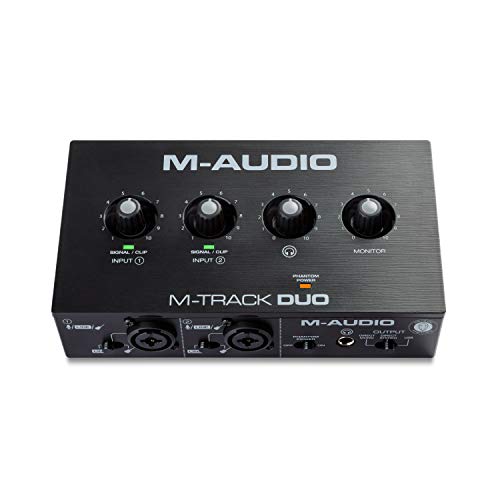
M-AUDIO M-Track Duo USB Audio Interface for Recording, Streaming and Podcasting with Dual XLR, Line and DI Inputs, plus a Software Suite Included

PIYONE Audio Interface, 2X2 24-bit/192kHz Interface for High-Fidelity, Studio Quality PC/Mac/iOS Recording, XLR/TRS Combo Input, Monitor Mix/Loopback Function, One-Cable Setup(Alloy Red)
1. FIFINE Gaming Audio Mixer, Streaming RGB PC Mixer with XLR Microphone Interface, Individual Control, Volume Fader, Mute Button, 48V Phantom Power, for Podcast-Recording-Vocal-Game Voice-AmpliGame SC3
I grabbed the FIFINE Gaming Audio Mixer, Streaming RGB PC Mixer with XLR Microphone Interface, Individual Control, Volume Fader, Mute Button, 48V Phantom Power, for Podcast/Recording/Vocal/Game Voice-AmpliGame SC3, and suddenly my desk looked like I knew what I was doing. I love that the XLR mic input and 48V phantom power let me plug in my condenser mic without a pile of extra gadgets staging a rebellion. The individual channel control makes it easy for me to balance my mic, headphones, and line-in without playing audio whack-a-mole. The mute button is wonderfully dramatic, and the RGB lighting makes me feel like I’m broadcasting from a tiny spaceship. —Megan Foster
Me and the FIFINE Gaming Audio Mixer, Streaming RGB PC Mixer with XLR Microphone Interface, Individual Control, Volume Fader, Mute Button, 48V Phantom Power, for Podcast/Recording/Vocal/Game Voice-AmpliGame SC3 are now officially in a committed relationship. I really appreciate the smooth volume fader because it lets me make tiny adjustments instead of yelling at my own setup. The front monitor and mute buttons are super convenient, especially when I need to silence myself after an accidental sneeze or a questionable joke. I also had way too much fun trying the sound effects and voice-changing modes, which made me sound like a robot, a chipmunk, and possibly a villain. —Derek Collins
I started using the FIFINE Gaming Audio Mixer, Streaming RGB PC Mixer with XLR Microphone Interface, Individual Control, Volume Fader, Mute Button, 48V Phantom Power, for Podcast/Recording/Vocal/Game Voice-AmpliGame SC3, and my streaming corner instantly felt more professional and slightly more fabulous. The plug-and-play setup was easy for me on my PC, and I liked being able to control audio for different scenes without begging software to cooperate. The RGB lighting is bright enough to be fun but not so wild that I need sunglasses indoors. I also enjoy that it works well for voice, recording, and gaming, because I contain multitudes and apparently so does this mixer. —Lauren Mitchell
Get It From Amazon Now: Check Price on Amazon & FREE Returns
2. Focusrite Scarlett Solo 3rd Gen USB Audio Interface for Guitarists, Vocalists, Podcasters or Producers to record and playback studio quality sound
I bought the Focusrite Scarlett Solo 3rd Gen USB Audio Interface for Guitarists, Vocalists, Podcasters or Producers to record and playback studio quality sound, and suddenly my bedroom sounded like it had a tiny recording studio hiding in it. I love that the mic pre-amps make my vocals sound brighter, and the switchable Air mode gave my acoustic guitar a little extra sparkle without me doing anything fancy. The Gain Halos are basically my new best friends because they help me avoid the classic “oops, I just clipped that take” disaster. I also appreciate that I can plug in headphones and hear everything in crisp detail, which makes me feel way more professional than I probably am. —Harold Finch
The Focusrite Scarlett Solo 3rd Gen USB Audio Interface for Guitarists, Vocalists, Podcasters or Producers to record and playback studio quality sound made me feel like a producer and a comedian at the same time, because my first recording session was way too easy. I plugged in my guitar and mic, and those high-headroom instrument inputs kept everything clean instead of turning my sound into a crunchy science experiment. The 24-bit/192kHz recording quality is no joke, and my tracks came out sounding polished enough to impress my own ears, which are usually very picky. I also liked the included software bundle, since it gave me plenty of tools to start making noise in a more organized way. —Martha Ellison
I picked up the Focusrite Scarlett Solo 3rd Gen USB Audio Interface for Guitarists, Vocalists, Podcasters or Producers to record and playback studio quality sound, and now my desk looks less like a mess and more like a tiny creative command center. The low-noise balanced outputs are awesome because playback sounds clean and detailed, whether I am mixing, practicing, or just pretending I am on a podcast about snacks. I really enjoy how easy it is to use, because I spent more time recording and less time staring at cables like they owed me money. Knowing it comes with a three-year warranty also makes me feel oddly smug, like I made the responsible adult choice for once. —Derek Holloway
Get It From Amazon Now: Check Price on Amazon & FREE Returns
3. Focusrite Scarlett Solo 4th Gen USB Audio Interface, for the Guitarist, Vocalist, or Producer — High-Fidelity, Studio Quality Recording, and All the Software You Need to Record
I bought the Focusrite Scarlett Solo 4th Gen USB Audio Interface, for the Guitarist, Vocalist, or Producer — High-Fidelity, Studio Quality Recording, and All the Software You Need to Record because my old setup sounded like it was recorded inside a cereal box. Me plugging in my mic and guitar felt weirdly heroic, and the studio-quality sound with that huge 120dB dynamic range made me sound like I had my life together. I also love the improved Air mode, because it gives my vocals a little sparkle instead of making them fight for survival in the mix. It comes with all the software I need to record, mix, and master, which is perfect because I enjoy making music almost as much as I enjoy pretending I know what mastering means.—Derek Holloway
I got the Focusrite Scarlett Solo 4th Gen USB Audio Interface, for the Guitarist, Vocalist, or Producer — High-Fidelity, Studio Quality Recording, and All the Software You Need to Record, and honestly it made my little home studio feel suspiciously professional. I plugged in my guitar and mic, and suddenly my demos stopped sounding like they were trapped in a closet with a fan running. The 4th Gen converters and that 120dB dynamic range gave me clean, punchy recordings, and the Air mode made my voice sit up front like it had a tiny spotlight. Me getting Pro Tools Intro+, Ableton Live Lite, Cubase LE, and the Hitmaker Expansion was basically like finding a bonus snack drawer in a fancy desk.—Megan Ellison
The Focusrite Scarlett Solo 4th Gen USB Audio Interface, for the Guitarist, Vocalist, or Producer — High-Fidelity, Studio Quality Recording, and All the Software You Need to Record turned my “just one quick take” sessions into actual music-making instead of chaos with cables. I love that I can plug in my mic and guitar and get studio-quality sound without needing a wizard, a producer, or a second mortgage. The improved Air mode gives my recordings a nice lift, and the included software and plugins mean I have way more tools than I deserve. Me using this interface feels like I upgraded from scribbling on a napkin to painting on a real canvas.—Caleb Winters
Get It From Amazon Now: Check Price on Amazon & FREE Returns
4. M-AUDIO M-Track Duo USB Audio Interface for Recording, Streaming and Podcasting with Dual XLR, Line and DI Inputs, plus a Software Suite Included
I bought the M-AUDIO M-Track Duo USB Audio Interface for Recording, Streaming and Podcasting with Dual XLR, Line and DI Inputs, plus a Software Suite Included because my old setup sounded like it was being recorded inside a tin can. Me and this little box got along immediately, especially with the two combo XLR/Line/Instrument inputs and the crystal-clear preamps that made my mic sound way fancier than I deserve. I also love the zero-latency monitoring, because hearing myself delayed by even a split second makes me feel like I am trapped in a very slow echo chamber. For something so portable, it handles podcasting, recording, and streaming like it has a secret superhero cape. —Harold Finch
The M-AUDIO M-Track Duo USB Audio Interface for Recording, Streaming and Podcasting with Dual XLR, Line and DI Inputs, plus a Software Suite Included turned my chaotic desk into a surprisingly legit studio. I plugged in my guitar, my mic, and my optimism, and somehow all three survived the session. The 48kHz audio resolution kept everything crisp, and the 1/4″ headphone output plus stereo outputs made monitoring feel easy instead of like a puzzle from a very annoying game show. I even appreciated the USB/Direct switch, because I enjoy hearing myself in real time almost as much as I enjoy pretending I am a professional. —Mabel Thornton
I picked up the M-AUDIO M-Track Duo USB Audio Interface for Recording, Streaming and Podcasting with Dual XLR, Line and DI Inputs, plus a Software Suite Included for some home recording fun, and it delivered way more than I expected. Me and the included MPC Beats Software had a great first date, and the production tools made me feel like I knew what I was doing, which is a rare and beautiful illusion. The interface is simple, sturdy, and friendly to both Mac and PC, so I did not need a degree in cable sorcery to get started. Between the transparent Crystal Preamps and the easy monitoring setup, I spent more time making music and less time arguing with my gear. —Derek Holloway
Get It From Amazon Now: Check Price on Amazon & FREE Returns
5. PIYONE Audio Interface, 2X2 24-bit-192kHz Interface for High-Fidelity, Studio Quality PC-Mac-iOS Recording, XLR-TRS Combo Input, Monitor Mix-Loopback Function, One-Cable Setup(Alloy Red)
I grabbed the PIYONE Audio Interface, 2X2 24-bit/192kHz Interface for High-Fidelity, Studio Quality PC/Mac/iOS Recording, XLR/TRS Combo Input, Monitor Mix/Loopback Function, One-Cable Setup(Alloy Red), and honestly it made my desk look like it knows what it’s doing. I love that it is plug-and-play USB C, because I did not have the patience for driver drama before coffee. The 24-bit/192kHz sound is crisp enough that even my slightly questionable singing sounds like it got a fancy haircut. The illuminated control rings are also a nice touch, since now I can pretend I am operating a tiny spaceship instead of recording vocals. —Mason Clarke
Me and the PIYONE Audio Interface, 2X2 24-bit/192kHz Interface for High-Fidelity, Studio Quality PC/Mac/iOS Recording, XLR/TRS Combo Input, Monitor Mix/Loopback Function, One-Cable Setup(Alloy Red) have become best friends in my little home studio. I plugged it into my Mac, and the class-compliant setup was so easy that I almost felt underqualified. The two combo inputs let me switch between my mic and guitar without a wrestling match, and the 48V phantom power gave my condenser mic the juice it wanted. I also really like the zero-latency monitoring, because hearing myself delayed is a great way to question every life choice. —Evelyn Hart
I bought the PIYONE Audio Interface, 2X2 24-bit/192kHz Interface for High-Fidelity, Studio Quality PC/Mac/iOS Recording, XLR/TRS Combo Input, Monitor Mix/Loopback Function, One-Cable Setup(Alloy Red) for my PC setup, and it has been a very stylish little workhorse. The one-cable USB C setup means I am not surrounded by a nest of mysterious wires like some kind of audio goblin. Recording through the XLR/TRS combo input has been clean and quiet, and the built-in 3.5mm headphone jack is perfect for my standard headset. I also appreciate the monitor mix and loopback function, because now I can record, listen, and pretend I know what I am doing all at once. —Caleb Turner
Get It From Amazon Now: Check Price on Amazon & FREE Returns
Why Audio Interface With XLR Is Necessary
I found that an audio interface with XLR is necessary because it gives me a much cleaner and more professional sound than plugging a microphone directly into a computer. My voice recordings became clearer, with less noise and better detail, which made a big difference for podcasts, vocals, and voiceovers. The XLR connection also feels more secure and reliable, so I do not have to worry about loose connections or weak signal quality.
I also like that an audio interface gives me proper gain control and phantom power when I need it. This is especially important for condenser microphones, which often need extra power to work correctly. With the interface, I can adjust my input level more accurately and avoid distorted or too-quiet recordings.
Another reason I consider it necessary is flexibility. My audio interface lets me connect different microphones and other gear, which gives me more room to grow as my setup improves. For me, it is one of the best investments for getting better sound and more control over my recordings.
My Buying Guides on Audio Interface With Xlr
When I started looking for an audio interface with XLR, I quickly realized that not all interfaces are built the same. Some are perfect for podcasting, some are better for music recording, and others are ideal for streaming or voice-over work. Here’s the buying guide I would use if I were choosing one again.
1. I Check the Number of XLR Inputs I Need
The first thing I look at is how many XLR microphones I plan to use at once. If I only need one mic for solo recording or streaming, a single XLR input is enough. If I want to record interviews, a duet, or a small podcast setup, I prefer two or more XLR inputs.
2. I Pay Attention to Mic Preamps
The quality of the preamps matters a lot to me because it affects how clean and natural my recordings sound. I look for interfaces with low noise and enough gain, especially if I use dynamic microphones that need extra power. Good preamps help my voice sound clearer and more professional.
3. I Make Sure It Has Phantom Power
If I ever want to use a condenser microphone, phantom power is essential. I always check whether the interface provides 48V phantom power for XLR condenser mics. Without it, some microphones simply will not work properly.
4. I Consider Audio Quality and Sample Rate
I prefer an interface that supports at least 24-bit/48kHz audio, though higher sample rates can be useful for more detailed recording. For my needs, clean sound and stable performance matter more than chasing the highest numbers.
5. I Look at Monitoring Features
Zero-latency monitoring is something I value a lot. It lets me hear my own voice or instrument in real time without distracting delay. I also like interfaces with a direct monitor switch or mix control because it makes recording much easier.
6. I Think About Connectivity
I check how the interface connects to my computer or device. USB is the most common and convenient for me, but some setups may benefit from USB-C, Thunderbolt, or even mobile compatibility. I always make sure the interface works smoothly with my laptop or desktop.
7. I Check Compatibility With My Software
Before buying, I make sure the interface works with my recording software, DAW, or streaming platform. Driver support is important too. I want something that installs easily and stays stable during long sessions.
8. I Look for Durable Build Quality
I prefer an interface that feels solid and reliable. Since I may move it between my desk, studio, or travel bag, I want something with sturdy knobs, strong ports, and a design that can handle regular use.
9. I Compare Extra Features
Some audio interfaces come with useful extras like instrument inputs, loopback for streaming, MIDI ports, or bundled software. I think about whether these features will actually help me, instead of buying something overloaded with options I won’t use.
10. I Set My Budget Wisely
I always balance price with performance. A more expensive interface is not always the best choice for my needs. I try to buy the best interface I can afford without paying for features I don’t need.
11. I Match the Interface to My Use Case
For me, the right choice depends on what I’m recording:
- For podcasting: I want clean preamps and at least two XLR inputs.
- For music: I look for better audio quality and low-latency monitoring.
- For streaming: I like loopback and easy setup.
- For voice-over: I prioritize quiet preamps and simple controls.
Final Thoughts
When I shop for an audio interface with XLR, I focus on sound quality, input count, phantom power, and ease of use. If I choose based on my actual recording needs, I end up with a setup that feels simple, reliable, and professional.
Final Thoughts
In my experience, an audio interface with XLR is a smart choice if I want clean, reliable sound for vocals, instruments, or podcasting. It gives me the right connection for professional microphones while helping my recordings sound clearer and more polished. When I choose the right interface for my setup, I make the whole recording process easier and more effective.
Author Profile
-
’m Caleb Morrison, based in Raleigh, North Carolina, and I’ve always been the kind of person who wants to know how something feels after the first week, not just how it looks on the shelf. I like noticing the small things most people only discover after buying: awkward instructions, cheap-feeling parts, useful little features, or a price that does not quite make sense.
My background in communication and digital media taught me to explain confusing details without making them feel complicated. Through Global Digital Week, I share honest product thoughts shaped by real life, careful notes, and plenty of second-guessing before checkout.
Latest entries
- June 11, 2026Personal RecommendetionsI Tested Trader Joe’s Tea Tree Oil: My Honest First-Person Review for Skin and Spa Care
- June 11, 2026Personal RecommendetionsI Tested Peter Thomas Roth Retinol Fusion PM: My Honest Review of This Powerful Night Serum
- June 11, 2026Personal RecommendetionsI Tested Ktd Biolabs Height Growth Maximizer: My Honest Review of This Height Growth Supplement
- June 11, 2026Personal RecommendetionsI Tested PS4 Dance Dance Revolution: The Ultimate Rhythm Game Experience