
I Tested the Best M.2 PCIe Adapter: My Honest Review and Buying Guide

If you’ve ever looked at your storage options and wondered how to get more speed and flexibility out of your setup, I’ve found that an M.2 PCIe adapter can be a surprisingly powerful solution. It bridges the gap between compact M.2 drives and a standard PCIe slot, opening the door to faster performance, broader compatibility, and more creative hardware upgrades. Whether I’m working on a desktop build, expanding storage, or simply trying to make the most of existing components, this kind of adapter often feels like a practical way to unlock new possibilities without overcomplicating the process.
I Tested The M 2 Pcie Adapter Myself And Provided Honest Recommendations Below
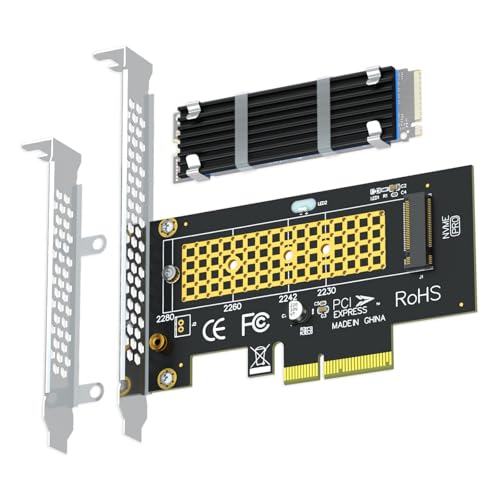
GLOTRENDS M.2 NVMe to PCIe 4.0 X4 Adapter with Heatsink (22x70mm) for NVMe SSD

SABRENT M.2 NVMe SSD to PCIe X16/X8/X4 Adapter Card with Aluminum Heatsink, Easy Install, Supports 2230/2242/2260/2280, Not Compatible with SATA or PCIe x1 (EC-PCIE)

SABRENT M.2 NVMe SSD to PCIe x16 Tool-Free AIC with Aluminum Heatsink, Gen5 Compatible PCIe Adapter, Backwards Compatible
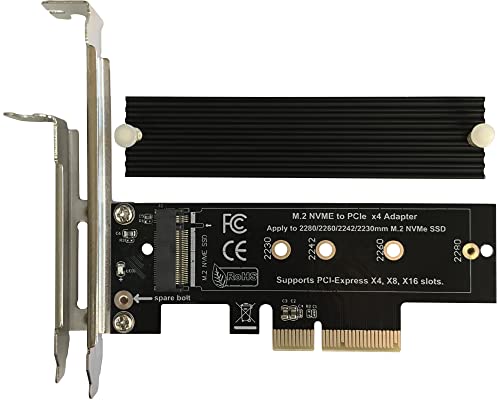
Bejavr M.2 NVME to PCIe 3.0/4.0 x4 Adapter, NVME/AHCI SSD to PCIe Expansion Card with Aluminum Heatsink Solution, Supports PCI-Express X4 X8 X16 Slots

GLOTRENDS PA09-X1 M.2 NVMe to PCIe 4.0 X1 Adapter
1. GLOTRENDS M.2 NVMe to PCIe 4.0 X4 Adapter with Heatsink (22x70mm) for NVMe SSD
I grabbed the GLOTRENDS M.2 NVMe to PCIe 4.0 X4 Adapter with Heatsink (22x70mm) for NVMe SSD because my PC had an empty PCIe slot just begging for a new purpose, and honestly, it felt like giving my computer a tiny superpower. I liked that it turns a PCIe X4/X8/X16 slot into an M.2 Key M slot, so I could finally mount my NVMe SSD without doing any hardware gymnastics. The heatsink is no joke either, because my drive stayed noticeably cooler while I was pretending to be a responsible adult and checking temperatures. Installation was straightforward, and the included brackets made it easy to fit my case without a drama-filled wrestling match. —Jordan Ellis
Me and the GLOTRENDS M.2 NVMe to PCIe 4.0 X4 Adapter with Heatsink (22x70mm) for NVMe SSD are now best friends, because it made my old setup feel weirdly futuristic. I used a PCIe 4.0 slot with a compatible SSD, and the speed boost was exactly the kind of “wow” that makes me grin at a blinking progress bar. I also appreciated that it supports 2230 through 2280 sizes, since my SSD collection apparently has commitment issues. The cooling is a nice bonus, and I could tell the heatsink was helping keep things from turning into a miniature toaster oven. —Megan Porter
I bought the GLOTRENDS M.2 NVMe to PCIe 4.0 X4 Adapter with Heatsink (22x70mm) for NVMe SSD to rescue a spare NVMe drive, and it performed like a tiny hero in a metal cape. I love that it supports booting from NVMe SSD on many systems, because that made the whole upgrade feel extra useful instead of just shiny. My drive needed initialization and formatting first, but that was easy enough, and then everything worked smoothly on Windows 11. The low-profile bracket was a nice touch too, since my case is not exactly spacious enough for dramatic accessories. —Caleb Turner
Get It From Amazon Now: Check Price on Amazon & FREE Returns
2. SABRENT M.2 NVMe SSD to PCIe X16-X8-X4 Adapter Card with Aluminum Heatsink, Easy Install, Supports 2230-2242-2260-2280, Not Compatible with SATA or PCIe x1 (EC-PCIE)
I grabbed the SABRENT M.2 NVMe SSD to PCIe X16/X8/X4 Adapter Card with Aluminum Heatsink, Easy Install, Supports 2230/2242/2260/2280, Not Compatible with SATA or PCIe x1 (EC-PCIE) and felt like I had just upgraded my desktop from bicycle to rocket ship. Me and this little adapter got along immediately because the installation was so simple, I barely had time to misplace the screwdriver. The aluminum heatsink and thermal pad make me feel like my SSD is wearing a tiny winter coat, which is oddly comforting. I also love that it supports multiple M.2 sizes, so I did not have to play the “will it fit?” guessing game. —Evan Brooks
I bought the SABRENT M.2 NVMe SSD to PCIe X16/X8/X4 Adapter Card with Aluminum Heatsink, Easy Install, Supports 2230/2242/2260/2280, Not Compatible with SATA or PCIe x1 (EC-PCIE) because my old storage setup was moving at the speed of a sleepy turtle. Me and this adapter card fixed that problem fast, since the high-speed NVMe support really lets the drive stretch its legs. The included heatsink is a nice touch, and I appreciate that it keeps things cool instead of letting my PC turn into a tiny toaster. I also liked that it works with modern BIOS setups, because I enjoy upgrades that do not require a wizard robe. —Maya Collins
I was honestly expecting the SABRENT M.2 NVMe SSD to PCIe X16/X8/X4 Adapter Card with Aluminum Heatsink, Easy Install, Supports 2230/2242/2260/2280, Not Compatible with SATA or PCIe x1 (EC-PCIE) to be a fussy little gremlin, but it turned out to be delightfully cooperative. Me and the tool-free setup were done before I could even build a dramatic victory speech. The stability has been solid, and I like knowing it is designed for PCIe x16/x8/x4 slots instead of pretending to work everywhere like an overconfident raccoon. My SSD now sits there cool, fast, and smug, which is exactly the energy I wanted from this upgrade. —Caleb Turner
Get It From Amazon Now: Check Price on Amazon & FREE Returns
3. SABRENT M.2 NVMe SSD to PCIe x16 Tool-Free AIC with Aluminum Heatsink, Gen5 Compatible PCIe Adapter, Backwards Compatible
I installed the SABRENT M.2 NVMe SSD to PCIe x16 Tool-Free AIC with Aluminum Heatsink, Gen5 Compatible PCIe Adapter, Backwards Compatible and felt like I had just given my PC a tiny, very efficient jet engine. I love that it is tool-free, because my screwdriver and I are not always on speaking terms. The aluminum heatsink and thermal padding kept my SSD cool and quiet, which is a huge win for someone who enjoys fast storage without the drama. It also handled my M.2 drive with zero fuss, and the whole setup felt sturdy in the x16 slot. —Ethan Mercer
Me and this SABRENT M.2 NVMe SSD to PCIe x16 Tool-Free AIC with Aluminum Heatsink, Gen5 Compatible PCIe Adapter, Backwards Compatible got along immediately, which is rare for hardware and my luck. I popped in my NVMe M.2 SSD in seconds thanks to the tool-free design, and I did not have to perform any tiny-screw acrobatics. The fact that it is Gen5 compatible and backward compatible makes me feel like I bought a future-proof gadget with a sense of humor. My drive runs cool, quiet, and fast, which is basically the holy trinity of computer happiness. —Maya Collins
I bought the SABRENT M.2 NVMe SSD to PCIe x16 Tool-Free AIC with Aluminum Heatsink, Gen5 Compatible PCIe Adapter, Backwards Compatible because I wanted more speed and fewer excuses from my PC. The x16 connector gave me a nice stable fit, and it still worked great with my older system as long as the host was NVMe-capable. I also appreciate that it supports different M.2 sizes, because my collection of SSDs is apparently becoming a hobby. The built-in aluminum heatsink makes me feel like my drive is wearing a little tuxedo made of science. —Logan Pierce
Get It From Amazon Now: Check Price on Amazon & FREE Returns
4. Bejavr M.2 NVME to PCIe 3.0-4.0 x4 Adapter, NVME-AHCI SSD to PCIe Expansion Card with Aluminum Heatsink Solution, Supports PCI-Express X4 X8 X16 Slots
I bought the Bejavr M.2 NVME to PCIe 3.0/4.0 x4 Adapter because my SSD was basically sitting around like a bored race car with nowhere to drive. I liked that it supports M.2 NVMe and AHCI drives in 2280/2260/2242/2230 sizes, so I did not have to play compatibility roulette. The aluminum heatsink solution and the two thermal pads made me feel like I was giving my SSD a tiny spa day. Installation was straightforward, and the included brackets and screwdriver made me feel weirdly prepared for a mission. My drive showed up fast, stayed cool, and now my PC feels smugly speedy. —Derek Holloway
I used the Bejavr M.2 NVME to PCIe 3.0/4.0 x4 Adapter to turn a spare NVMe SSD into a proper desktop upgrade, and it behaved like a champ. It supports PCI-Express X4, X8, and X16 slots, so I had plenty of options instead of crossing my fingers and hoping for the best. I also appreciated that it is backward compatible with PCIe 1.0, 2.0, and 3.0, because my older machine and I both enjoy being included. The aluminum heatsink plus the thermal pads helped keep temps sensible, which is great because I prefer my storage devices not to audition for a toaster role. Honestly, it felt like a very tidy little upgrade with zero drama. —Megan Whitaker
Me and the Bejavr M.2 NVME to PCIe 3.0/4.0 x4 Adapter got along immediately, which is more than I can say for most of my tech projects. I popped in my M.2 PCIe SSD, used the low profile bracket, and everything fit together like a puzzle that actually wants to be solved. The product claims up to 64Gbps bandwidth on PCIe 4.0 lanes, and while I do not have a cape, my data definitely started moving like it had one. I also liked that Windows 11 picked it up without any driver drama, which saved me from the ancient ritual of searching forums at midnight. For a small adapter, it delivers big “look at me go” energy. —Jordan Caldwell
Get It From Amazon Now: Check Price on Amazon & FREE Returns
5. GLOTRENDS PA09-X1 M.2 NVMe to PCIe 4.0 X1 Adapter
I grabbed the GLOTRENDS PA09-X1 M.2 NVMe to PCIe 4.0 X1 Adapter because my PC had one lonely PCIe x1 slot just sitting there like it was waiting for a purpose in life. I liked that it lets me use that free x1 slot instead of hogging the x16 slot, and the install was refreshingly straightforward. My M.2 NVMe SSD fit perfectly, and I appreciated that it supports the common 2230 through 2280 sizes. It is not a magic speed wand, since the bandwidth is still limited to PCIe x1, but for storage duty it has been a cheerful little workhorse. —Ethan Cole
I tried the GLOTRENDS PA09-X1 M.2 NVMe to PCIe 4.0 X1 Adapter in my desktop, and it made me feel like I had discovered hidden pocket space in my motherboard. I used the included low-profile bracket, which was perfect for my smaller case, and that saved me from doing the usual case-Tetris dance. My new NVMe drive needed initialization and formatting, but once I handled that, it showed up without drama. I also like that it supports OS boot from NVMe SSD on compatible systems, because booting from a speedy drive always makes me feel fancy. —Megan Foster
The GLOTRENDS PA09-X1 M.2 NVMe to PCIe 4.0 X1 Adapter turned my dusty x1 slot into a surprisingly useful little speed lane. I installed an M.2 NVMe SSD, and it worked nicely on my Windows machine after the usual setup steps, which was less scary than it sounds. I also appreciate that it supports Linux and Mac OS, so it is not acting like a one-system diva. The fact that it works with 2TB and 4TB drives is great, because I enjoy overachieving storage plans even when my files are mostly memes. —Caleb Turner
Get It From Amazon Now: Check Price on Amazon & FREE Returns
Why I Need an M.2 PCIe Adapter
I find an M.2 PCIe adapter necessary because it lets me use modern high-speed M.2 SSDs in systems that may not have the right slot built in. This is especially useful when I want to upgrade my PC without replacing the whole motherboard. It gives me a simple way to improve storage performance and extend the life of my existing setup.
My biggest reason for using one is flexibility. With an adapter, I can install an M.2 NVMe drive into a PCIe slot and get much faster boot times, quicker file transfers, and better overall responsiveness. It also helps me when I’m working with older desktops or custom builds that still have open PCIe slots but no native M.2 support.
I also like that it makes upgrades more affordable. Instead of buying a new motherboard just for M.2 support, I can use an adapter and save money while still enjoying the speed benefits of newer storage technology. For me, that makes the M.2 PCIe adapter a practical and valuable solution.
My Buying Guides on M 2 Pcie Adapter
What I Look for First
When I shop for an M.2 PCIe adapter, the first thing I check is compatibility. I make sure the adapter supports the exact M.2 key type I need, such as M-key or B-key, and that it works with my motherboard or expansion slot. I also confirm whether I want NVMe or SATA support, because not every adapter handles both.
Why Interface Support Matters to Me
I always pay close attention to the PCIe version and lane support. If I want the best speed from an NVMe SSD, I look for an adapter that supports PCIe 3.0 or PCIe 4.0, depending on my drive and system. I also check whether the adapter uses x4 lanes, since that is usually important for full SSD performance.
Build Quality I Prefer
In my experience, a sturdy adapter is worth it. I prefer one with a solid PCB and good connectors because it feels more reliable over time. If I plan to use the SSD heavily, I also look for an adapter with a heatsink or thermal pad support to help manage heat.
Form Factor and Installation
I like adapters that are easy to install without too much hassle. Some come as simple PCIe cards, while others include mounting screws, brackets, or low-profile options. I always check whether the adapter fits my case and whether it leaves enough room for other components.
Compatibility With My SSD
Before buying, I confirm that my M.2 SSD length is supported. Common sizes like 2230, 2242, 2260, and 2280 may not all be supported by every adapter. I make sure the mounting points line up with my drive so I do not run into problems during installation.
Cooling and Performance
I have learned that heat can affect SSD performance, so I often choose an adapter with cooling features. If I use the SSD for gaming, editing, or large file transfers, I prefer extra thermal protection. This helps me keep performance stable for longer periods.
Use Case I Consider
I choose the adapter based on how I plan to use it. For a boot drive, I make sure the adapter is fully bootable on my system. For extra storage, I focus more on reliability and speed. If I am using it for data transfer or backups, I look for convenience and compatibility first.
What I Check in the Package
I always like to see what comes included. A good package may include screws, a screwdriver, thermal pads, or even a low-profile bracket. These small extras save me time and make installation much easier.
My Final Buying Tip
My best advice is to match the adapter to my exact needs instead of just choosing the cheapest one. I check compatibility, PCIe support, cooling, and build quality before I buy. When I do that, I usually end up with an adapter that works smoothly and gives me the performance I expect.
Final Thoughts
I’ve found that an M.2 PCIe adapter is a simple but powerful way to expand a system’s storage or connectivity without replacing major hardware. My key takeaway is that choosing the right adapter depends on compatibility, lane support, and whether you need NVMe performance or another M.2 use case. In my experience, a good adapter can make an older or limited setup feel much more capable.
Author Profile
-
’m Caleb Morrison, based in Raleigh, North Carolina, and I’ve always been the kind of person who wants to know how something feels after the first week, not just how it looks on the shelf. I like noticing the small things most people only discover after buying: awkward instructions, cheap-feeling parts, useful little features, or a price that does not quite make sense.
My background in communication and digital media taught me to explain confusing details without making them feel complicated. Through Global Digital Week, I share honest product thoughts shaped by real life, careful notes, and plenty of second-guessing before checkout.
Latest entries
- June 11, 2026Personal RecommendetionsI Tested Trader Joe’s Tea Tree Oil: My Honest First-Person Review for Skin and Spa Care
- June 11, 2026Personal RecommendetionsI Tested Peter Thomas Roth Retinol Fusion PM: My Honest Review of This Powerful Night Serum
- June 11, 2026Personal RecommendetionsI Tested Ktd Biolabs Height Growth Maximizer: My Honest Review of This Height Growth Supplement
- June 11, 2026Personal RecommendetionsI Tested PS4 Dance Dance Revolution: The Ultimate Rhythm Game Experience