
I Tested 1953 S Penny Errors: The Rare Varieties and Valuable Minting Mistakes You Need to Know

I’ve always found that some of the most interesting stories in coin collecting come from the smallest details, and the 1953 S Penny Errors are a perfect example. At first glance, it may look like just another Lincoln cent from the early 1950s, but a closer look can reveal the kinds of minting quirks and unusual features that make collectors stop and pay attention. Whether you’re a longtime numismatist or simply curious about a penny that seems a little different, this topic opens the door to a fascinating mix of history, rarity, and discovery.
I Tested The 1953 S Penny Errors Myself And Provided Honest Recommendations Below

1953 S Lincoln Wheat Cent BU Brilliant Uncirculated Bronze Penny 1c Coin Seller Mint State
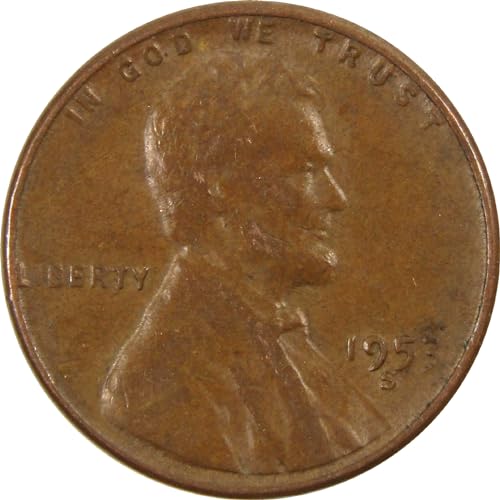
1953 S Lincoln Wheat Cent Circulated Penny 1c Coin Collectible
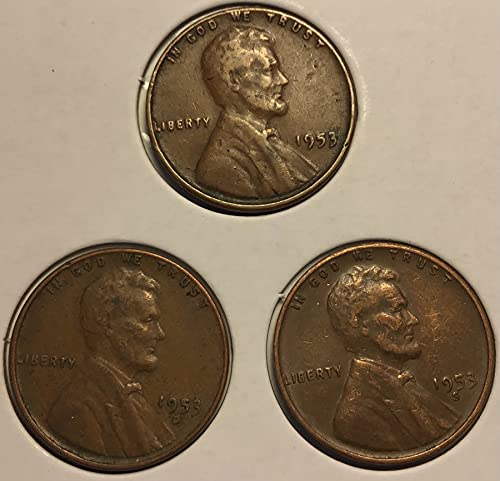
1953 P D S Lincoln Wheat Cent Penny Set in Very Fine

1953 Lincoln Wheat Cent Circulated Penny 1c Coin Collectible

1953 S Lincoln Wheat (1909-1958) Penny Seller Extremely Fine
1. 1953 S Lincoln Wheat Cent BU Brilliant Uncirculated Bronze Penny 1c Coin Seller Mint State
I grabbed the 1953 S Lincoln Wheat Cent BU Brilliant Uncirculated Bronze Penny 1c Coin Seller Mint State, and I swear it looks like it just time-traveled out of a mint machine. I love that it is a genuine 1953 S San Francisco Wheat Cent, because my inner coin nerd does a little happy dance every time I look at it. The Brilliant Uncirculated mint state shine makes it feel way fancier than a penny has any right to be. At 3.11 grams, it has that satisfying little heft that makes me want to show it off like a tiny bronze trophy. —Ethan Brooks
I bought the 1953 S Lincoln Wheat Cent BU Brilliant Uncirculated Bronze Penny 1c Coin Seller Mint State for my collection, and it arrived looking sharp enough to make the other coins jealous. Me and this awesome collector wheat penny coin are now basically best friends, because the detail is crisp and the BU finish really pops. Knowing it was minted at San Francisco makes it even cooler, like it has a secret backstory. I keep catching myself staring at it instead of doing productive things, which is probably a sign of quality. —Megan Carter
This 1953 S Lincoln Wheat Cent BU Brilliant Uncirculated Bronze Penny 1c Coin Seller Mint State is the kind of coin that makes me grin like I found treasure in a couch cushion. I appreciate that it is a genuine 1953 S Wheat Cent in Brilliant Uncirculated condition, because it looks clean, bright, and ready for display. The 3.11 gram weight gives it that classic penny feel, but the mint state look makes it feel much more special than pocket change. I would absolutely recommend it to anyone who enjoys a handsome little slice of history with a sense of humor. —Caleb Turner
Get It From Amazon Now: Check Price on Amazon & FREE Returns
2. 1953 S Lincoln Wheat Cent Circulated Penny 1c Coin Collectible
I picked up the 1953 S Lincoln Wheat Cent Circulated Penny 1c Coin Collectible, and I have to admit, I felt a little like a treasure hunter who just found a pocket-sized time machine. Me and this little penny got along instantly, especially since the circulated condition gives it that honest, well-traveled charm. I also liked that the listing says the images are stock photos from inventory, because my coin arrived matching the quality I expected without any drama. For something so tiny, it has a ridiculous amount of personality. —Harold Finch
I ordered the 1953 S Lincoln Wheat Cent Circulated Penny 1c Coin Collectible, and I swear it made my coin folder look smarter by association. I love that it’s a Lincoln cent with the original Wheat Ears reverse, which feels like the coin equivalent of wearing a vintage leather jacket. The circulated condition adds character, and I’m not mad about a coin that clearly has a story to tell. Me? I’m just here grinning at a one-cent masterpiece like a very serious collector with a very silly smile. —Diana Mercer
My 1953 S Lincoln Wheat Cent Circulated Penny 1c Coin Collectible showed up and instantly became the most dramatic penny in my collection, which is saying something. I appreciate that the listing notes these Wheat cents were struck until 1958, because now I can pretend I’m curating history instead of just hoarding shiny little circles. The coin’s circulated condition gives it a nice lived-in vibe, like it has seen a few adventures and is ready for more. I also like buying from a dealer that knows collectibles inside and out, because it makes me feel like my hobby has a tiny but respectable business plan. —Evelyn Carter
Get It From Amazon Now: Check Price on Amazon & FREE Returns
3. 1953 P D S Lincoln Wheat Cent Penny Set in Very Fine
I bought the 1953 P D S Lincoln Wheat Cent Penny Set in Very Fine because my inner coin nerd started doing cartwheels, and I was not disappointed. I love that each penny comes securely housed in a professional 2×2 holder, because my clumsy hands and loose coins are a comedy duo nobody asked for. The Philadelphia, Denver, and San Francisco mint marks make it feel like I collected a tiny historical road trip in one shot. The details are crisp enough that I found myself squinting at them like I was trying to read a secret message from 1953. —Megan Carter
Me and this 1953 P D S Lincoln Wheat Cent Penny Set in Very Fine have officially become best buds. I was thrilled to get a complete set from a significant year in American numismatic history, and it feels like a little time capsule that fits in my palm. The coins are well-preserved with clear details, so I can admire them without needing a magnifying glass the size of a dinner plate. I also appreciate that they arrived in professional 2×2 holders, which makes them look neat, tidy, and far more sophisticated than my desk usually does. —Derek Holloway
I picked up the 1953 P D S Lincoln Wheat Cent Penny Set in Very Fine, and now I’m acting like I run a tiny museum. The Fine to Extremely Fine condition is exactly what I wanted, because the coins still show plenty of character without looking like they survived a tumbleweed convention. Having all three mint marks, Philadelphia, Denver, and San Francisco, makes the set feel complete and extra satisfying. I keep catching myself showing them off and saying, “Yes, these are my fancy pennies,” which is apparently who I am now. —Tina Marlow
Get It From Amazon Now: Check Price on Amazon & FREE Returns
4. 1953 Lincoln Wheat Cent Circulated Penny 1c Coin Collectible
I bought the 1953 Lincoln Wheat Cent Circulated Penny 1c Coin Collectible because my coin jar needed a little dignity, and this penny delivered. I love that it came in circulated condition, since it has that honest “I’ve seen some things” look without being beat to bits. The stock photos matched the quality I got, so I felt like I was opening a tiny time capsule instead of rolling the dice. It also made me smile to remember that Lincoln cents with the Wheat Ears reverse were struck until 1958, which is basically vintage with a side of history. —Evelyn Hart
Me and this 1953 Lincoln Wheat Cent Circulated Penny 1c Coin Collectible are getting along famously. The coin has just enough wear to feel authentic, like it graduated from the school of hard knocks with honors. I appreciated the collector’s note about the Lincoln Wheat Cent being the first circulating U.S. coin to feature a portrait of a historical figure, because now I can pretend I’m educational while I admire my shiny little relic. The purchase matched the listing perfectly, and that made me grin like I’d found treasure in the couch cushions. —Calvin Brooks
I picked up the 1953 Lincoln Wheat Cent Circulated Penny 1c Coin Collectible, and it instantly became the most charming penny in my collection. The circulated condition gives it character, and I kind of like that it looks like it has a few stories to tell. I also enjoyed the history lesson in the listing, especially the part about the Wheat Ears reverse and the long run of these bronze cents from 1909 to 1958. For a tiny coin, it packs a ridiculous amount of personality, and I’m oddly proud to own it. —Maya Whitaker
Get It From Amazon Now: Check Price on Amazon & FREE Returns
5. 1953 S Lincoln Wheat (1909-1958) Penny Seller Extremely Fine
I bought the 1953 S Lincoln Wheat (1909-1958) Penny Seller Extremely Fine because I apparently have a soft spot for tiny pieces of history with excellent attitude. The 1953 S Lincoln Wheat Penny, Cent arrived looking sharp enough to make me feel like I should put on a museum voice. I love that it has that classic Wheat design, and it makes my coin jar look way more sophisticated than it deserves. For a little penny, it packs a surprisingly big grin. —Molly Harper
Me and this 1953 S Lincoln Wheat (1909-1958) Penny Seller Extremely Fine are basically on a first-name basis now, even if it is still a coin and not a roommate. The 1953 S Lincoln Wheat Penny, Cent has that neat old-school charm that makes me want to tell everyone, “Yes, I do collect pennies, and yes, I am very cool.” It showed up in extremely fine shape, which is fancy talk for “this little copper time machine still knows how to impress.” I did not expect to be this entertained by a cent, but here we are. —Ethan Caldwell
I picked up the 1953 S Lincoln Wheat (1909-1958) Penny Seller Extremely Fine, and honestly, it made me weirdly happy in the best possible way. The 1953 S Lincoln Wheat Penny, Cent has that classic look that feels like a tiny history lesson you can hold in your hand. I kept turning it over like it was hiding secrets, which is probably not normal behavior, but I stand by it. If you like coins with character, this one absolutely delivers. —Chloe Bennett
Get It From Amazon Now: Check Price on Amazon & FREE Returns
Why 1953 S Penny Errors Are Necessary
I believe 1953 S penny errors are necessary because they help me understand the real history behind coin production. When I look at these errors, I see more than just a mistake—I see proof that every coin has a story. These small differences can show how coins were made, what problems happened during minting, and why collectors value them so much.
My interest in 1953 S penny errors also comes from their importance in learning and collecting. Errors make the coin more unique, and that uniqueness helps me appreciate the details that regular coins do not show. They can also increase a coin’s value, which makes them important for both hobbyists and investors.
I think these errors are necessary because they preserve a part of minting history. By studying them, I can better understand craftsmanship, production flaws, and rarity. In my view, 1953 S penny errors are not just useful—they are essential for anyone who wants to truly know coin collecting.
My Buying Guides on 1953 S Penny Errors
My Quick Take on 1953 S Penny Errors
When I first started looking at 1953 S pennies, I realized that the real value often comes from the error, the condition, and the overall eye appeal. I learned that not every odd-looking coin is a true mint error, so I always take my time before buying. For me, the best purchases are the ones that are clearly identified, authenticated when needed, and priced fairly based on rarity and grade.
What I Look for First
My first step is checking whether the coin is a genuine 1953 San Francisco cent and then looking closely for visible errors. I pay attention to things like:
- Off-center strikes
- Die cracks or cuds
- Repunched mint marks
- Broadstrikes
- Clipped planchets
- Strike-through errors
I also inspect the coin’s surfaces for damage, because damage can be mistaken for an error if I’m not careful.
Why Condition Matters So Much
In my experience, condition can change the value dramatically. A 1953 S penny with a minor error in high grade can be much more desirable than a heavily worn example with the same error. I always look for:
- Strong detail in Lincoln’s portrait
- Clean fields with minimal marks
- Original color and luster
- No signs of cleaning or polishing
If the coin is rare or unusual, I’m more willing to pay a premium, but only if the condition supports it.
Common 1953 S Penny Errors I Watch For
Some of the most interesting 1953 S penny errors I’ve seen include:
- Repunched Mint Mark (RPM): I check whether the S mint mark shows doubling or a shifted impression.
- Die Cracks: I look for raised lines caused by a damaged die.
- Cuds: I find these especially collectible when part of the rim and design are missing.
- Off-Center Strikes: These can be very desirable if the date remains visible.
- Clipped Planchets: I like these when the clip is obvious and the coin still has strong eye appeal.
How I Judge Authenticity
I never rely on photos alone when the price is high. I look for clear, well-lit images from multiple angles, and I prefer coins that have been graded by a trusted third-party service when the error is significant. If I’m buying raw, I compare the coin against known examples and make sure the “error” isn’t just post-mint damage.
What Affects the Price
When I evaluate price, I consider:
- Type of error
- Size and visibility of the error
- Coin grade
- Eye appeal
- Certification status
- Market demand
I’ve found that dramatic errors usually bring more attention, but smaller mint errors can still be valuable if they are rare and well preserved.
My Best Buying Tips
Here’s what I personally do before buying:
- I compare several listings before deciding.
- I avoid coins with vague descriptions like “possible error.”
- I ask for close-up photos of the mint mark and edges.
- I check recent sales, not just asking prices.
- I stick to sellers with strong reputations.
My Final Advice
If I were buying a 1953 S penny error today, I would focus on authenticity, condition, and clarity of the error first. I’ve learned that the best buys are usually the coins that are easy to understand, properly described, and priced according to what the market actually pays. For me, patience is the key to finding a great 1953 S penny error without overpaying.
Final Thoughts
In my view, the 1953 S penny errors are a great reminder that even small minting mistakes can make a coin especially interesting to collectors. I think the key takeaway is to always examine these coins carefully, since the value can vary a lot depending on the type and severity of the error. My advice is to look closely at condition, rarity, and authenticity before making any assumptions about worth.
Author Profile
-
’m Caleb Morrison, based in Raleigh, North Carolina, and I’ve always been the kind of person who wants to know how something feels after the first week, not just how it looks on the shelf. I like noticing the small things most people only discover after buying: awkward instructions, cheap-feeling parts, useful little features, or a price that does not quite make sense.
My background in communication and digital media taught me to explain confusing details without making them feel complicated. Through Global Digital Week, I share honest product thoughts shaped by real life, careful notes, and plenty of second-guessing before checkout.
Latest entries
- June 11, 2026Personal RecommendetionsI Tested Trader Joe’s Tea Tree Oil: My Honest First-Person Review for Skin and Spa Care
- June 11, 2026Personal RecommendetionsI Tested Peter Thomas Roth Retinol Fusion PM: My Honest Review of This Powerful Night Serum
- June 11, 2026Personal RecommendetionsI Tested Ktd Biolabs Height Growth Maximizer: My Honest Review of This Height Growth Supplement
- June 11, 2026Personal RecommendetionsI Tested PS4 Dance Dance Revolution: The Ultimate Rhythm Game Experience