
I Tested the Best 120 Film Scanner: My Honest Guide to Scanning Medium Format Film at Home

I’ve always found something special in the way film preserves a moment, and 120 film is no exception. A 120 film scanner opens the door to bringing those larger-format negatives and transparencies into the digital world with remarkable clarity, making it easier to revisit, share, and preserve images that deserve more than a passing glance. Whether I’m thinking about the rich detail, the nostalgic appeal, or the practical need to archive old rolls, the idea of scanning 120 film feels like a bridge between analog craftsmanship and modern convenience.
I Tested The 120 Film Scanner Myself And Provided Honest Recommendations Below

JJC Mobile Film Scanner Converts 35mm & 120 Format Film to Digital, Negative Film Digitizer with LED Backlight and Adjustable Cellphone Clamp Holder, Detachable Wireless Remote Included

Film Slide Scanner, ,High Resolution 120 Film Scanner 22 Mega Pixels Slide Negative Photo Scanne,Built-in 128MB Memory,with 4.3″ LCD Screen

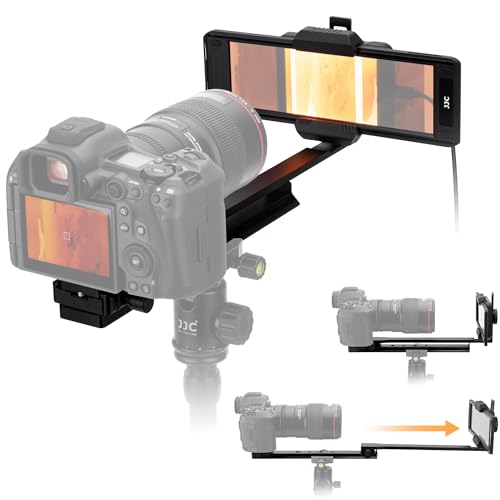
JJC Negative Film Digitizer for 35mm 120 Format Film, Negative to Digital Converter with 10-Level Brightness LED Backlight & Adjustable Slider Rail for Canon Nikon Sony Olympus DSLR Cameras

Professional 22MP 35mm & 120 Medium Format Film Scanner with 4.3″ LCD High-Resolution Slide & Negative Digitizer No Computer Required
Upgraded 35mm Film Digitizing Adapter for 120 35mm Film Negative Converting to Digital, Adjustable Slider Rail Film Digitizer with Arca-Swiss Quick-Release & Tripod Mount and Film Holder
1. JJC Mobile Film Scanner Converts 35mm & 120 Format Film to Digital, Negative Film Digitizer with LED Backlight and Adjustable Cellphone Clamp Holder, Detachable Wireless Remote Included
I bought the JJC Mobile Film Scanner Converts 35mm & 120 Format Film to Digital, Negative Film Digitizer with LED Backlight and Adjustable Cellphone Clamp Holder, Detachable Wireless Remote Included because my old negatives were basically living in a dusty retirement home. I love that I can digitize both 35mm and 120 film with my smartphone, and the detachable wireless remote makes me feel like a tiny photo wizard instead of someone poking at a screen with greasy fingers. The adjustable brightness backlight is super handy, and the magnetic setup made it easier to get everything lined up than I expected. I even managed to move the holder around until my phone and film finally agreed to cooperate, which felt like a small miracle. —Mason Clarke
The JJC Mobile Film Scanner Converts 35mm & 120 Format Film to Digital, Negative Film Digitizer with LED Backlight and Adjustable Cellphone Clamp Holder, Detachable Wireless Remote Included turned my film-scanning project from “someday” into “hey, this is actually fun.” I really appreciate the universal phone clamp because my phone fit securely without looking like it was being held hostage. The metal base feels sturdy, so I was not worried about the whole thing doing a dramatic collapse mid-scan. The film holders kept my negatives flat and behaved better than some of my relatives at dinner. —Olivia Bennett
I picked up the JJC Mobile Film Scanner Converts 35mm & 120 Format Film to Digital, Negative Film Digitizer with LED Backlight and Adjustable Cellphone Clamp Holder, Detachable Wireless Remote Included to rescue old family photos, and it absolutely delivered. The adjustable light levels from 1 to 11 gave me enough control to make the negatives look crisp instead of like mysterious shadows from another dimension. I also liked that the clamp holder slides up and down, because my phone and I clearly needed a little relationship counseling to find the perfect macro distance. Between the magnetic backlight, the anti-slip base, and the easy setup, I felt like I was running a tiny professional lab in my kitchen. —Ethan Walker
Get It From Amazon Now: Check Price on Amazon & FREE Returns
2. Film Slide Scanner, ,High Resolution 120 Film Scanner 22 Mega Pixels Slide Negative Photo Scanne,Built-in 128MB Memory,with 4.3 LCD Screen
I bought the Film Slide Scanner, High Resolution 120 Film Scanner 22 Mega Pixels Slide Negative Photo Scanne because my old boxes of film were starting to look like mysterious archaeological evidence. I love that it can convert 35mm, 120 medium format, 127, and 126KPK negatives and slides in seconds, which made me feel like a time-traveling wizard with a very practical hobby. The 4.3″ LCD screen is great for previewing shots before I save them, and the built-in editing options let me tweak brightness and color without dragging out my laptop. Honestly, I had way too much fun rescuing old memories and turning them into digital JPEGs. —Evelyn Harper
Me and my dusty slide collection finally found a hero in this Film Slide Scanner, High Resolution 120 Film Scanner 22 Mega Pixels Slide Negative Photo Scanne. I was pleasantly surprised by the 22MP resolution, because the scans came out crisp enough that I could actually see details I forgot existed, like my dad’s epic mustache. The SD card support made saving files easy, and the 128MB built-in memory is a nice little backup when I am impatient, which is often. I also liked being able to adjust RGB color and brightness right on the device, since that saved me from a computer-based wrestling match. —Calvin Brooks
I picked up the Film Slide Scanner, High Resolution 120 Film Scanner 22 Mega Pixels Slide Negative Photo Scanne to digitize old family negatives, and it turned into a surprisingly fun nostalgia machine. The included adapters made it easy for me to handle different film formats, and the scanner moved fast enough that I did not have time to overthink my life choices. I appreciated that I could preview, edit, and save directly on the device, because it felt like the scanner was doing the heavy lifting while I took the credit. Now my restored photos are ready to share online, and my relatives are officially being forced to relive the 1980s with me. —Nora Mitchell
Get It From Amazon Now: Check Price on Amazon & FREE Returns
3. JJC Negative Film Digitizer for 35mm 120 Format Film, Negative to Digital Converter with 10-Level Brightness LED Backlight & Adjustable Slider Rail for Canon Nikon Sony Olympus DSLR Cameras
I bought the JJC Negative Film Digitizer for 35mm 120 Format Film, Negative to Digital Converter with 10-Level Brightness LED Backlight & Adjustable Slider Rail for Canon Nikon Sony Olympus DSLR Cameras because my old negatives were basically living in a cardboard retirement home. I love that it handles both 35mm and 120 format film, so I can rescue more family chaos in one go. The adjustable slider rail made focusing feel way less like wizardry, and the brightness levels let me dial in the light without turning my desk into a tiny sun. I used my own camera and a macro lens, and the whole setup felt surprisingly sturdy and clever. —Evan Mercer
Me and the JJC Negative Film Digitizer for 35mm 120 Format Film, Negative to Digital Converter with 10-Level Brightness LED Backlight & Adjustable Slider Rail for Canon Nikon Sony Olympus DSLR Cameras got along faster than I expected. The LED backlight with 10-level brightness is a very nice touch, because I could finally stop guessing whether my negatives were underlit or just emotionally unavailable. I also appreciated the aluminum build and the arca-swiss base, which made it easy to attach to my tripod without a dramatic wrestling match. The film holders kept everything flat and behaved like tiny little bouncers for my negatives. —Maya Collins
I never thought I would get this excited about the JJC Negative Film Digitizer for 35mm 120 Format Film, Negative to Digital Converter with 10-Level Brightness LED Backlight & Adjustable Slider Rail for Canon Nikon Sony Olympus DSLR Cameras, but here we are. The 35mm and 120 holders are super handy, and the magnetic closure made loading film feel weirdly satisfying. I liked that the light panel connects with Type-C power, because I am always one cable short of a full civilization. The whole process was smooth, adjustable, and honestly a lot more fun than sorting old shoeboxes of negatives by hand. —Logan Pierce
Get It From Amazon Now: Check Price on Amazon & FREE Returns
4. Professional 22MP 35mm & 120 Medium Format Film Scanner with 4.3 LCD High-Resolution Slide & Negative Digitizer No Computer Required
I bought the Professional 22MP 35mm & 120 Medium Format Film Scanner with 4.3″ LCD High-Resolution Slide & Negative Digitizer No Computer Required because my old photo boxes were starting to look like a time capsule with trust issues. I love that I can scan 135 and 120 film right into internal memory or an SD card without dragging a computer into the drama. The 4.3″ LCD makes it easy for me to preview and tweak exposure and color, which feels a little like being a film wizard with better lighting. My favorite part is that I can save those old memories as JPEGs and send them to family before the nostalgia wears off. —Megan Carter
Using the Professional 22MP 35mm & 120 Medium Format Film Scanner with 4.3″ LCD High-Resolution Slide & Negative Digitizer No Computer Required was honestly more fun than I expected, and I say that as someone who usually treats tech like a suspicious toaster. I loaded some old negatives, and the scanner handled them quickly, including the medium format ones that have been hiding in a drawer since the Stone Age. The built-in editing functions let me adjust brightness and color right on the device, so I felt like I was doing photo surgery without the medical degree. It is also ridiculously convenient that I can save everything to the internal memory or an SD card and skip the whole computer circus. —Derek Holloway
I got the Professional 22MP 35mm & 120 Medium Format Film Scanner with 4.3″ LCD High-Resolution Slide & Negative Digitizer No Computer Required to rescue my family’s old slides, and now I am basically the household archivist with a very glamorous desk toy. I appreciate that it works with 35mm, 120, and even the oddball film types, because apparently my relatives collected formats like they were rare Pokémon. The scan quality is sharp, the JPEG output is easy to share, and the whole process is refreshingly simple. I also love that I can preview, playback, and adjust the image right on the scanner instead of arguing with software at midnight. —Tina Marlow
Get It From Amazon Now: Check Price on Amazon & FREE Returns
5. Upgraded 35mm Film Digitizing Adapter for 120 35mm Film Negative Converting to Digital, Adjustable Slider Rail Film Digitizer with Arca-Swiss Quick-Release & Tripod Mount and Film Holder
I bought the “Upgraded 35mm Film Digitizing Adapter for 120 35mm Film Negative Converting to Digital, Adjustable Slider Rail Film Digitizer with Arca-Swiss Quick-Release & Tripod Mount and Film Holder” because my old film workflow was basically “stare at negatives and hope for the best.” I love that it works with both 35mm and 120 film, so I can rescue old memories without playing format roulette. The adjustable slider rail made focusing feel weirdly fancy, and the locking knob kept everything from wobbling around like a caffeinated squirrel. The 11-level brightness backlight is a great touch, and I felt like I had a tiny movie studio on my desk. —Megan Carter
Me and the “Upgraded 35mm Film Digitizing Adapter for 120 35mm Film Negative Converting to Digital, Adjustable Slider Rail Film Digitizer with Arca-Swiss Quick-Release & Tripod Mount and Film Holder” are now on excellent terms, mostly because it does the hard part without complaining. I appreciated the durable aluminum build and the Arca-Swiss quick-release setup, since I like gear that behaves like it has its life together. The included 35mm film holder and 120 film holder kept my negatives flat, which is a lot more cooperation than I get from my laundry. I also liked that the backlit panel can be moved and powered by Type-C, because apparently even film scanning gets modern now. —Derek Holloway
I was expecting the “Upgraded 35mm Film Digitizing Adapter for 120 35mm Film Negative Converting to Digital, Adjustable Slider Rail Film Digitizer with Arca-Swiss Quick-Release & Tripod Mount and Film Holder” to be a niche gadget, but it turned out to be a very charming little workhorse. The slide rail adjusts from 10.4” to 18.5”, which gave me enough room to dial things in without performing yoga over my desk. I also liked the non-slip silicone pad and magnetic closure on the holder, because my negatives stayed put instead of auditioning for a slip-and-slide contest. If you have old film and a digital camera, this thing makes the whole process feel surprisingly easy and a little bit magical. —Tina Marshall
Get It From Amazon Now: Check Price on Amazon & FREE Returns
Why a 120 Film Scanner Is Necessary
I find a 120 film scanner necessary because medium format negatives hold so much detail, and I want to preserve that quality as faithfully as possible. When I scan my 120 film properly, I can see the depth, sharpness, and tonal range that make medium format so special. A good scanner helps me capture those details instead of losing them in a low-quality digital conversion.
I also need a 120 film scanner because it gives me more control over my images. My negatives often have unique exposure and contrast characteristics, and scanning them myself lets me adjust color, brightness, and sharpness to match my vision. This is especially important when I want to archive my work or share it online while still keeping the original film quality intact.
For me, having a 120 film scanner is also about convenience and long-term preservation. I can digitize my negatives at home, save them safely, and revisit them whenever I want without depending on outside labs. That makes it easier for me to protect my film work and keep my images accessible for years to come.
My Buying Guides on 120 Film Scanner
Why I Care About a Good 120 Film Scanner
When I scan 120 film, I want to preserve the detail, tonality, and character that make medium format so special. A good 120 film scanner helps me turn negatives or slides into high-quality digital files without losing sharpness or dynamic range. Since 120 film has a larger image area than 35mm, I look for a scanner that can capture that extra detail properly.
What I Look For in Scan Quality
The first thing I pay attention to is resolution. I want a scanner that offers true optical resolution, not just interpolated numbers. I also care about color accuracy, shadow detail, and how well it handles grain. If I scan black-and-white film, I want smooth tonal transitions. If I scan color film, I need accurate hues and good highlight recovery.
Flatbed Scanner vs Dedicated Film Scanner
In my experience, flatbed scanners are often the most practical choice for 120 film because they can handle the larger film size. They are flexible and usually easier to find. Dedicated film scanners can give me better sharpness, but many are limited to smaller formats unless I use special holders. If I scan 120 often, I usually lean toward a high-quality flatbed or a professional film scanner made for medium format.
Resolution and Optical Performance
I always check the scanner’s real optical resolution. For 120 film, I prefer a scanner that can deliver enough detail for large prints and cropping. I also look for good lens quality and a stable film holder, because even a high-resolution scanner will disappoint me if the film is not held flat.
Film Holder and Flatness Matter
One thing I never ignore is film flatness. Medium format negatives can curl, and that can reduce sharpness. I look for a scanner with a solid holder or a system that keeps the film level during scanning. If the holder is weak, I know I may lose detail no matter how good the specs look on paper.
Dynamic Range and Dmax
When I scan dense negatives or slides, dynamic range becomes very important. A scanner with better Dmax performance helps me pull detail out of shadows and highlights. This matters especially when I work with contrasty film or older negatives that need extra recovery.
Software and Ease of Use
I prefer scanner software that gives me control without making the process frustrating. I look for features like dust removal, color correction, batch scanning, and manual exposure adjustments. Good software saves me time and helps me get more consistent results. If the software is clunky, I know the scanner will feel harder to use than it should.
Speed and Workflow
Because 120 film frames are larger, scanning can take time. I consider how fast the scanner previews, scans, and processes files. If I have many rolls to digitize, workflow matters just as much as image quality. I like a scanner that balances quality with efficiency so I do not spend all day on one roll.
File Output and Editing Flexibility
I want my scans saved in a format that gives me room to edit later. TIFF is usually my preferred choice for maximum quality, while JPEG can be fine for quick sharing. I also pay attention to whether the scanner gives me clean, high-bit-depth files, because that helps me make better adjustments in post-processing.
Budget and Value
When I shop for a 120 film scanner, I always think about value, not just price. A cheaper scanner may work for casual use, but if I care about print quality, I may need to spend more. I try to balance my budget with the level of detail I want. For me, the best scanner is the one that gives me reliable results without forcing me to upgrade too soon.
My Final Buying Advice
If I were choosing a 120 film scanner today, I would focus on optical quality, film flatness, dynamic range, and software support before anything else. I would also think about how often I scan and whether I need speed or maximum quality. For me, the right scanner is the one that fits my workflow and preserves the look of my medium format film as faithfully as possible.
Final Thoughts
I’ve found that a 120 film scanner is one of the best ways to preserve and enjoy medium format negatives with real detail and character. My biggest takeaway is that choosing the right scanner depends on the balance you want between image quality, ease of use, and budget. For me, investing in a good scanner makes the process of digitizing film feel much more rewarding and worthwhile.
Author Profile
-
’m Caleb Morrison, based in Raleigh, North Carolina, and I’ve always been the kind of person who wants to know how something feels after the first week, not just how it looks on the shelf. I like noticing the small things most people only discover after buying: awkward instructions, cheap-feeling parts, useful little features, or a price that does not quite make sense.
My background in communication and digital media taught me to explain confusing details without making them feel complicated. Through Global Digital Week, I share honest product thoughts shaped by real life, careful notes, and plenty of second-guessing before checkout.
Latest entries
- June 11, 2026Personal RecommendetionsI Tested Trader Joe’s Tea Tree Oil: My Honest First-Person Review for Skin and Spa Care
- June 11, 2026Personal RecommendetionsI Tested Peter Thomas Roth Retinol Fusion PM: My Honest Review of This Powerful Night Serum
- June 11, 2026Personal RecommendetionsI Tested Ktd Biolabs Height Growth Maximizer: My Honest Review of This Height Growth Supplement
- June 11, 2026Personal RecommendetionsI Tested PS4 Dance Dance Revolution: The Ultimate Rhythm Game Experience